
Cynocephalus variegatus
- noun
- Specialized
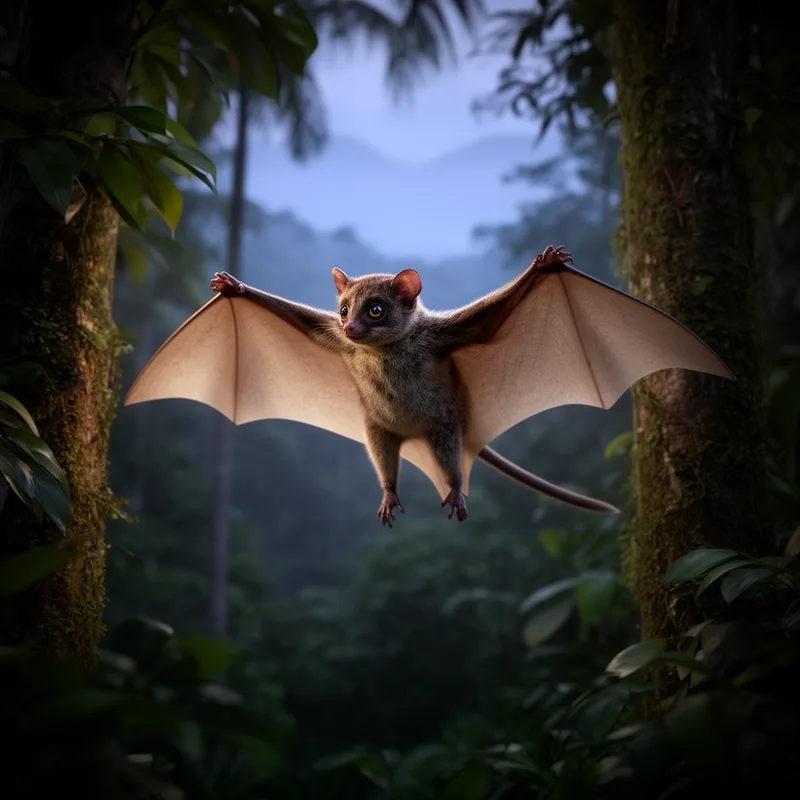
- The Cynocephalus variegatus uses its skin membrane to glide gracefully between the tall trees of its rainforest habitat.
Examples
-
The Cynocephalus variegatus spends most of its life gliding from tree to tree in the rainforest canopy.
-
Researchers observed that Cynocephalus variegatus is primarily nocturnal, feeding on leaves and fruits at night.
-
Deforestation has threatened the natural habitat of the Cynocephalus variegatus in Southeast Asia.
-
The Cynocephalus variegatus is known for its gliding abilities.
-
Have you ever seen a Cynocephalus variegatus in the wild?
-
In the evenings, Cynocephalus variegatus can be seen soaring through the treetops in search of fruits to eat.
-
Scientists have studied the unique gliding mechanism of the Cynocephalus variegatus to understand its adaptation to arboreal life.
Synonyms

A night animal that lives in trees in Southeast Asia and glides on skin flaps
Surface Forms
Morphology
Cynocephalus + variegatus
The name is a taxonomic binomial: the genus 'Cynocephalus' (a group of gliding mammals) plus a species epithet, so a learner who knows the genus would correctly infer this refers to a specific species of that gliding mammal. However, species epithets are Latin and taxonomic naming is specialized (and 'variegatus' is not a common English word here), so the full sense and any descriptive nuance are not fully predictable to a typical B1 learner.
Etymology
Cynocephalus variegatus comes from old words: Cynocephalus means 'dog-headed' and variegatus means 'varied' or 'spotted'. Early naturalists thought the animal's face looked a bit like a small dog and its fur had patches, so the name paints a picture of this gliding lemur and helps you remember the species.

