
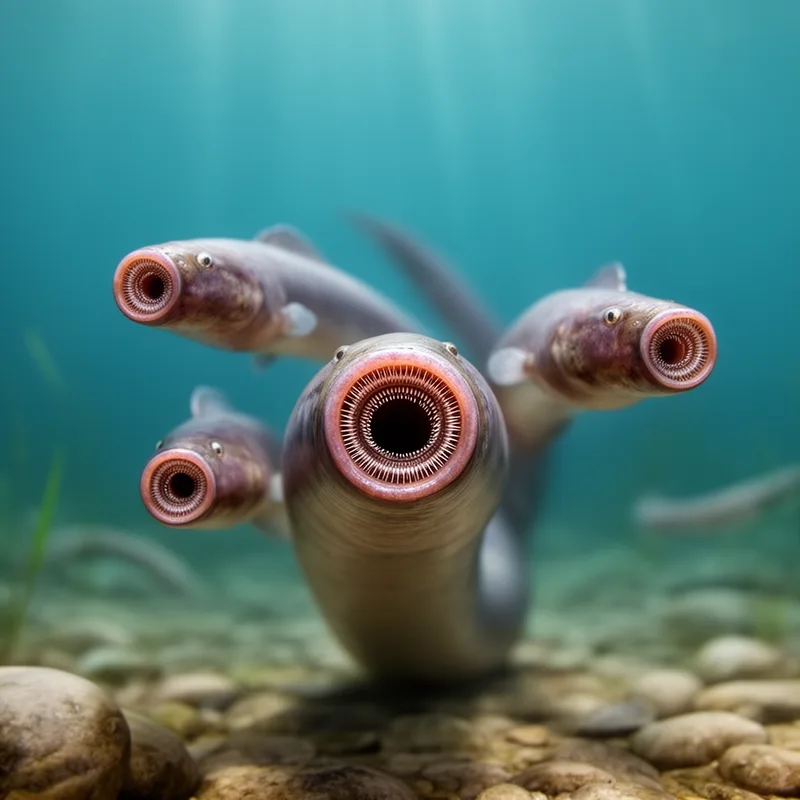
Cyclostomata
- noun
- /ˌsaɪkləˈstɑːmətə/
- Specialized
- Lampreys and hagfishes belong to the Cyclostomata, a group characterized by their round mouths and lack of jaws.
Examples
-
Lampreys and hagfishes are members of the Cyclostomata, a group known for their jawless mouths.
-
The evolutionary significance of Cyclostomata lies in their primitive characteristics among vertebrates.
-
Students studied the anatomy of Cyclostomata during their zoology lab session.
-
The Cyclostomata are fascinating creatures of the ocean.
-
Did you know that Cyclostomata lack jaws?
-
During the class, the professor explained that Cyclostomata are among the most primitive vertebrates found in aquatic environments.
-
The study of Cyclostomata helps scientists understand the evolution of jawed vertebrates.
Synonyms

A group of simple jawless water animals like lampreys and hagfish
Compounds
- Specialized
A group of simple jawless water animals like lampreys and hagfish
Surface Forms
Morphology
Cyclostomata = Cyclostoma (opaque) = cyclo + stoma + ta
The form uses Greek combining elements and a classical plural ending (-ta) and denotes a specialized taxonomic group, which is not transparently derived for an average learner.
Etymology
Cyclostomata comes from Greek parts cyclo- meaning 'circle' and -stoma meaning 'mouth'. So, Cyclostomata are animals with round, sucker-like mouths, like lampreys and hagfishes.

