

Cuscuta
- noun
- /ˈkʌskjʊtə/
- Specialized
- Because Cuscuta lacks chlorophyll, it must rely entirely on other plants for survival.
Examples
-
The stem of Cuscuta twined tightly around its host plant, draining it of nutrients.
-
Many farmers struggle with Cuscuta infestations.
-
Botanists often study Cuscuta to understand plant parasitism in ecosystems.
-
The Cuscuta plant is often found in fields.
-
The stem of Cuscuta twined tightly around its host plant, draining it of nutrients.
-
Botanists often study Cuscuta to understand plant parasitism in ecosystems.
-
Many farmers struggle with Cuscuta infestations.
Synonyms

A group of leafless plants that live on and take food from other plants
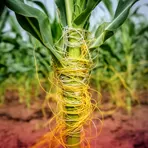
A thin yellow or white plant that twines around other plants and takes their food
Compounds

- Specialized
A leafless vine that grows on other plants with orange-yellow stems and many small white bell-shaped flowers
- Specialized
A group of leafless plants that live on and take food from other plants
Surface Forms
Etymology
Cuscuta comes from older European names for the dodder plant and was adopted by botanists as the scientific name. A helpful way to remember it is to think of Cuscuta as the formal name for 'dodder', a leafless vine that wraps around other plants and takes their food, which is why Cuscuta refers to a twining, parasitic herb.

