
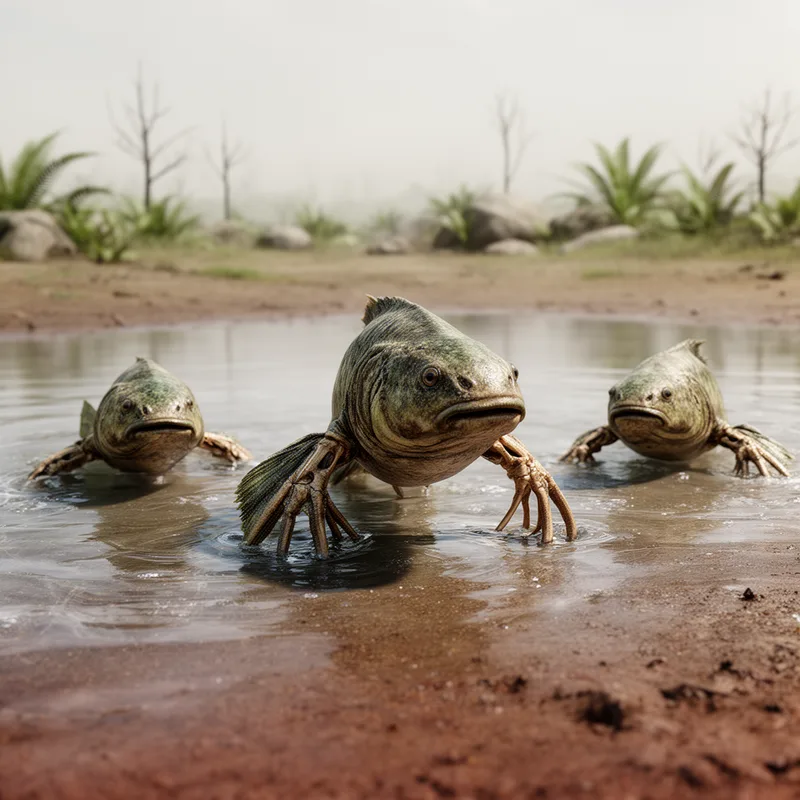
Crossopterygii


 1
9.9
- noun
- /ˌkrɔsəˈtɛrɪdʒiˌaɪ/
- Specialized
- Scientists often study the Crossopterygii to understand how aquatic life adapted to terrestrial environments.
Examples
-
Fossils of Crossopterygii provide key evidence for the evolution of land-dwelling vertebrates.
-
The Crossopterygii are fascinating because they bridge the gap between fish and amphibians.
-
The Crossopterygii had robust, limb-like fins that helped them move in shallow waters.
-
Many paleontologists study the Crossopterygii to understand evolution better.
-
The Crossopterygii were crucial in the evolution of vertebrates, as they possessed limb-like fins that helped bridge the transition to land.
-
Scientists study fossils of Crossopterygii to understand the anatomical features that link them to early amphibians.
-
Among the ancient fishes, the Crossopterygii are notable for their unique lobe-finned structure that resembles the limbs of terrestrial animals.
Surface Forms
Etymology
Crossopterygii comes from old Greek parts crosso- ('fringe') and -pterygii ('fin'), so it literally means 'fringed fins'. That's why the name fits these extinct fishes: they had strong, limb-like fins that looked like fringed wings and helped them move in shallow water on the way to becoming the first land animals.