
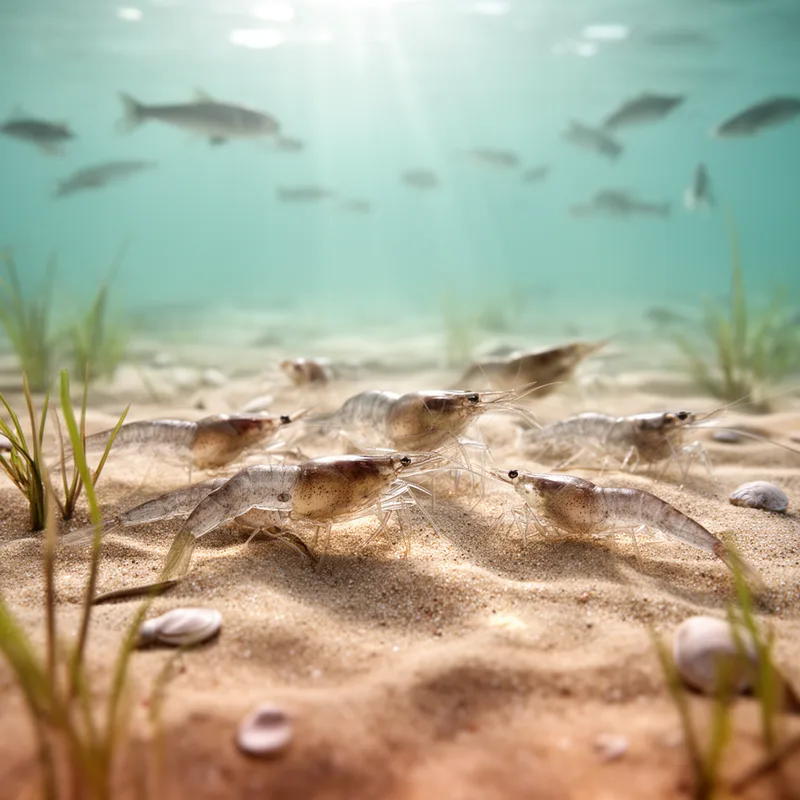
Crangonidae
- noun
- Specialized
- The Crangonidae family includes various species of sand shrimps.
Examples
-
Several species within the Crangonidae family play a crucial role in coastal food webs.
-
Many Crangonidae are found in shallow coastal waters.
-
Fishermen sometimes catch Crangonidae while trawling for other seafood.
-
The Crangonidae are often studied for their adaptability to different salinities.
-
Fishermen sometimes catch Crangonidae while trawling for shrimp along the coast.
-
Several species within the Crangonidae family are commonly found in sandy marine environments.
-
The Crangonidae family includes small shrimps that are important for the ecosystem.
Synonyms
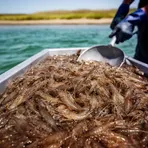
A group of small sea shrimps that live near coasts and are often eaten
Compounds
- Specialized
A group of small sea shrimps that live near coasts and are often eaten
Surface Forms
Morphology
Crangonidae = Crangon (opaque) = Crangon + idae
The suffix '-idae' is a specialized taxonomic marker (family) and is not transparently understood by average learners from the base 'Crangon'.
Etymology
Crangonidae comes from the shrimp name Crangon plus the scientific ending -idae, which means 'family' in animal names. Crangon comes from an old Greek word for 'shrimp', so Crangonidae simply means the 'family of Crangon shrimps', which is why it names a group of small coastal shrimps.

