
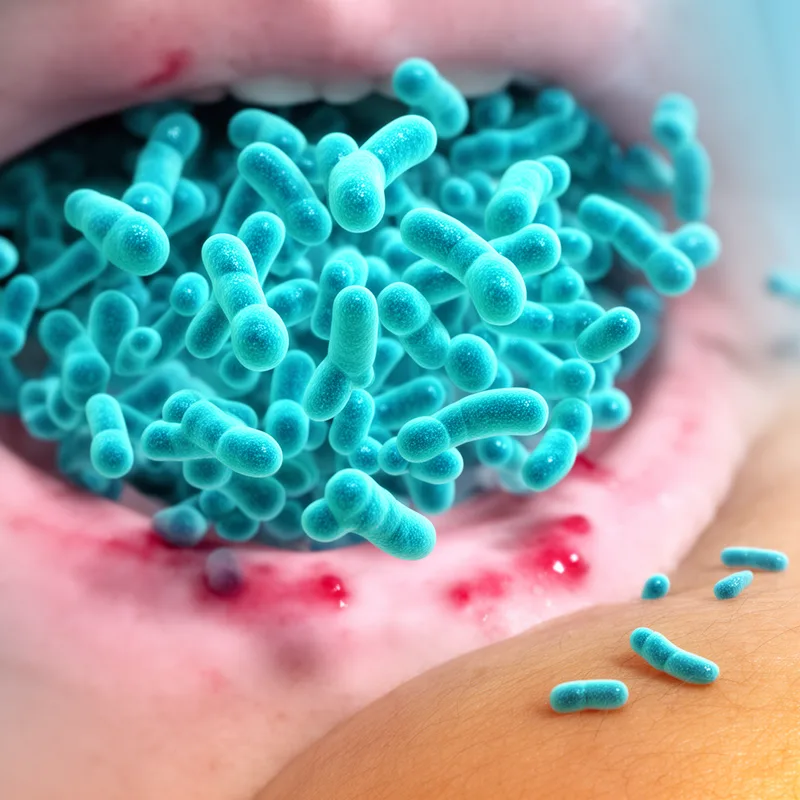
Corynebacterium
- noun
- /ˌkɔːrɪnɪbækˈtɪəriəm/
- Specialized
- In the 1950s, for example, investigators realized that the bacterium Corynebacterium diphtheriae causes the upper respiratory illness known as diphtheria only if a certain bacteriophage infects the microbe.
- Corynebacterium ulcerans
Examples
-
In contrast, infants delivered by caesarean section typically show microbial communities associated with the skin, including Staphylococcus, Corynebacterium, and Propionibacterium.
Blog text (23) -
Origin of nontoxigenic tox-bearing Corynebacterium ulcerans field strains among game animals and gross pathology results from necropsies, Germany.
Academic text (2014) -
Corynebacterium ulcerans may cause diphtheria in humans and caseous lymphadenitis in animals.
Academic text (2014) -
Figure 2. Pseudotuberculosis-like caseous abscesses caused by Corynebacterium ulcerans in wild boar S28/3/13. Scale is shown in millimeters.
Academic text (2014) -
Similarly, we have collected 12,000 bacterial isolates during the past 4 years, and standard microbiology has recovered only two cases of Corynebacterium tuberculostearicum—one from an infected ear and one from an infected eye.
Academic text (2003) -
Corynebacterium ulcerans may cause diphtheria in humans and caseous lymphadenitis in animals.
-
Three genera—Corynebacterium, Propionibacterium, and Staphylococcus—account for most of the bacteria in your nostrils.
Compounds

Surface Forms
Morphology
Etymology
Corynebacterium comes from the parts koryne, meaning 'club', and bacterium, meaning 'rod' or 'staff', and the second part is the same root as in bacteria. That's a helpful picture: these are bacteria that look like club-shaped rods under a microscope, and some kinds can cause disease such as diphtheria.

