
Corydalis solida
- noun
- Specialized
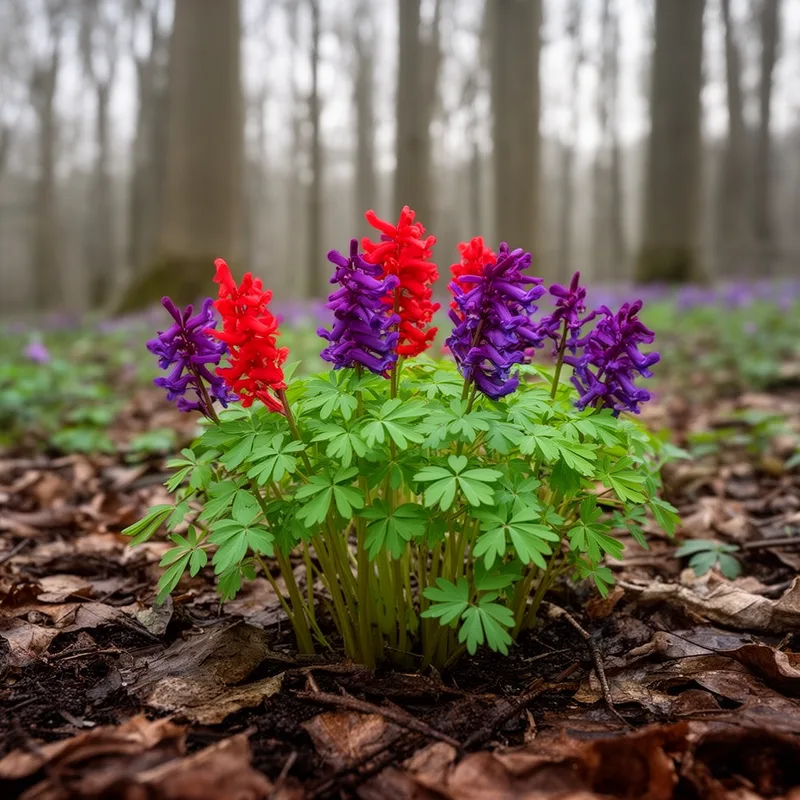
- Gardeners often plant Corydalis solida for its striking red flowers and delicate foliage.
Examples
-
Corydalis solida appears in woodlands throughout northern Europe in early spring.
-
The tuber of Corydalis solida allows it to survive harsh winter conditions.
-
The Corydalis solida blooms beautifully in early spring.
-
Have you seen the Corydalis solida in the garden?
-
Corydalis solida is known for its bright red flowers that bloom in early spring, attracting many pollinators.
-
In northern Europe, Corydalis solida thrives in shaded woodlands, creating a beautiful carpet of color during the flowering season.
-
Corydalis solida is a perennial herb that can often be found growing among the fallen leaves in forested areas.
Synonyms

A small plant with red or purple flowers used in traditional medicine

A small plant with colored flowers from Europe and Asia that people use in traditional medicine
Surface Forms
Morphology
Corydalis + solida
This is a Latin binomial taxonomic name rather than a compositional English phrase; knowing the genus label 'Corydalis' and an unknown element 'solida' does not allow a B1 learner to infer the descriptive meaning (a perennial herb with purplish flowers). Botanical Latin functions as a fixed proper name and the constituent parts are not productive English words for most learners, so the overall meaning is not derivable from the parts.
Etymology
Corydalis solida may come from old Greek and Latin words. Corydalis comes from a Greek word for the small bird the 'lark' because people thought the flower or root looked a little like a lark's beak, and solida means 'solid' or 'firm' in Latin, referring to its thick root. So the name helps you remember it is a spring plant with a firm, bulb-like root.

