
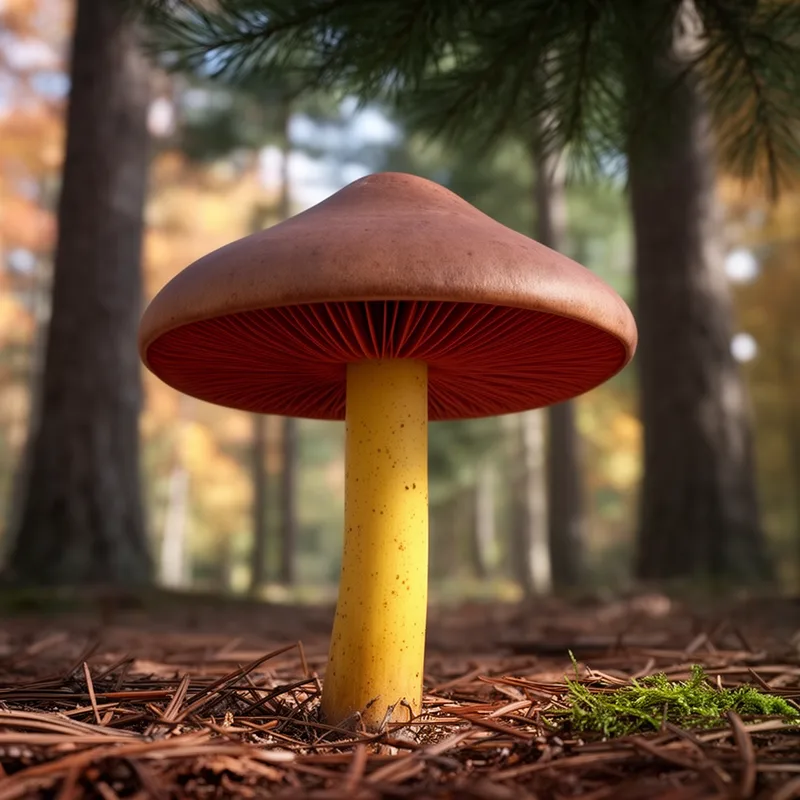
Cortinarius semisanguineus
- noun
- Specialized
- The distinctive rusty red gills of the Cortinarius semisanguineus can help identify it in the wild.
Examples
-
Many mushroom enthusiasts avoid collecting Cortinarius semisanguineus due to its similar appearance to toxic species.
-
The Cortinarius semisanguineus is often found in coniferous forests.
-
In autumn, Cortinarius semisanguineus is often found growing beneath pine and spruce trees.
-
Have you ever seen a Cortinarius semisanguineus in the wild?
-
In autumn, Cortinarius semisanguineus is often found growing beneath pine and spruce trees.
-
Many mushroom enthusiasts avoid collecting Cortinarius semisanguineus due to its similar appearance to toxic species.
-
The distinctive rusty red gills of the Cortinarius semisanguineus can help identify it in the wild.
Surface Forms
Morphology
Cortinarius + semisanguineus
This is a Latin binomial (scientific) name composed of taxonomic/Latin elements rather than ordinary English words; the parts are not familiar or productive for a B1 English learner (and one constituent is not even found in an English dictionary). As a proper name for a species, its referent (a particular fungus) cannot be derived from the constituent forms, so the meaning is not transparently recoverable.
Etymology
Cortinarius semisanguineus gets its name from Latin: Cortinarius refers to a thin 'curtain' or web that young mushrooms show, and semisanguineus means 'half-blood' for its rusty red gills. So the name paints a simple picture of a mushroom with a thin web-like curtain and red gills, which helps you remember it.

