
Cortinarius gentilis
- noun
- Specialized
- It is important to avoid collecting Cortinarius gentilis because it is highly poisonous.
Examples
-
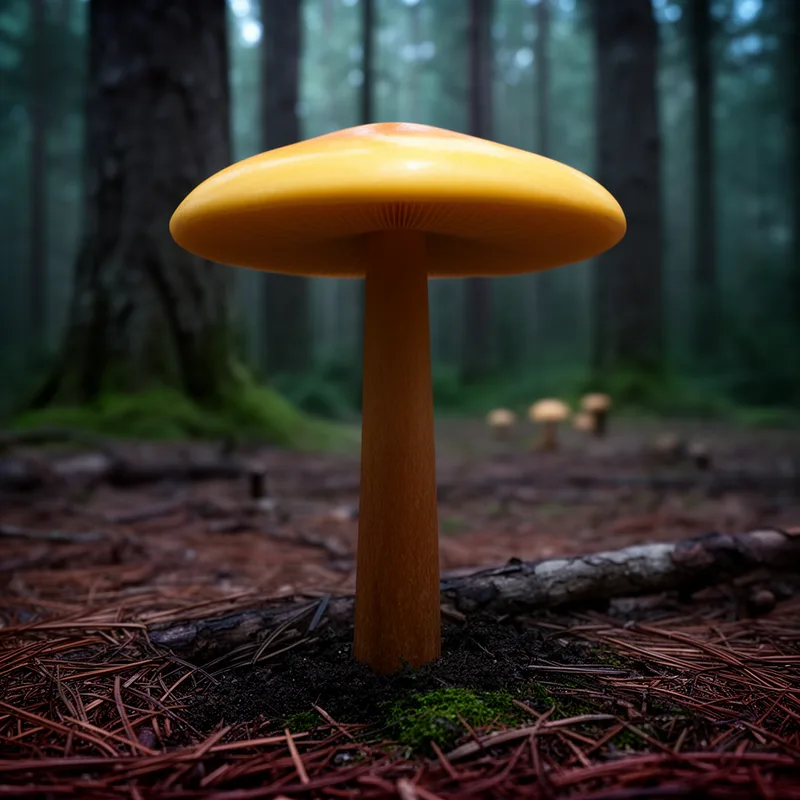
The Cortinarius gentilis is known for its bright yellow-brown cap.
-
The forest floor was dotted with Cortinarius gentilis beneath the pine trees.
-
Experts warn that Cortinarius gentilis can be mistaken for edible mushrooms by inexperienced foragers.
-
I found a Cortinarius gentilis in the forest yesterday.
-
Experts warn that Cortinarius gentilis can cause severe health issues if consumed.
-
It is essential to recognize Cortinarius gentilis to avoid accidental poisoning.
-
The Cortinarius gentilis mushroom grows in clusters in the damp areas of the forest.
Synonyms



 1
9.9
A group of mushrooms with rusty red spores and a thin web-like veil found in woods
Surface Forms
Morphology
Cortinarius + gentilis
This is a Latin binomial (a taxonomic species name) and functions as a proper noun; its meaning ('a particular poisonous mushroom') is not compositionally derived from everyday English words. One constituent ('gentilis') is not a standard English word and 'Cortinarius' is a genus label rather than a descriptive English noun, so a B1 learner who knows the listed constituents would not be able to predict the species-level meaning. Binomial names are language-neutral labels and therefore behave idiomatically/unpredictably for general learners.
Etymology
Cortinarius gentilis comes from Latin and points to a visible feature: Cortinarius refers to a thin cobweb-like 'curtain' that young mushrooms show between cap and stem, and gentilis is the species name given by the scientist. So the name creates a picture of a veiled mushroom, but the mushroom is 'poisonous' and should be avoided.