
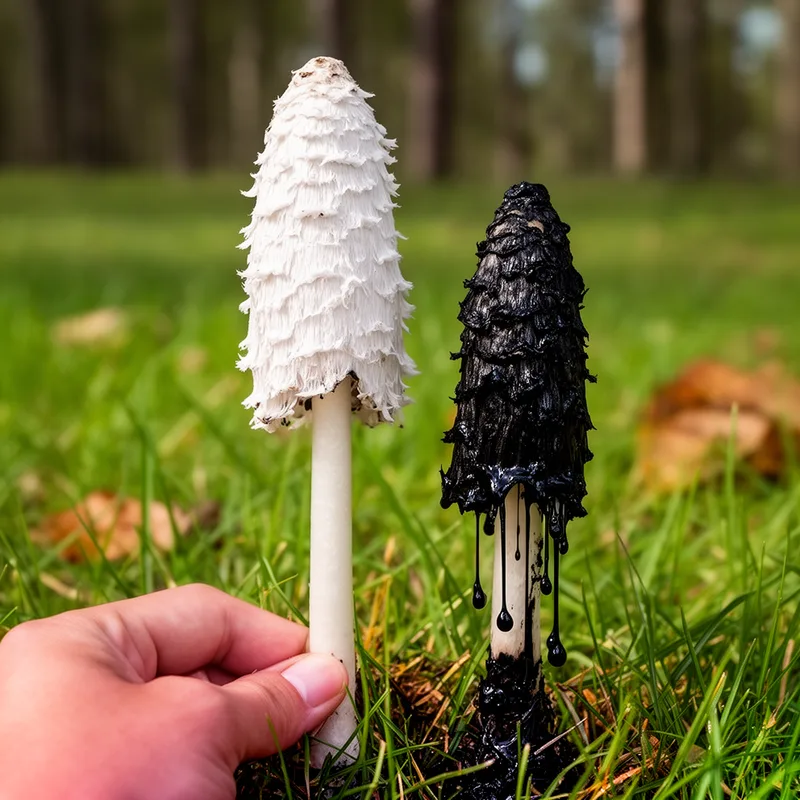
Coprinus comatus
- noun
- The Coprinus comatus is easy to recognize by its shaggy white cap and tall, slender shape.
Examples
-
Many foragers collect Coprinus comatus in the wild because it is a delicious edible mushroom.
-
If left unpicked, Coprinus comatus quickly liquefies into a black, inky substance.
-
The Coprinus comatus is often found in grassy areas.
-
Have you ever tried Coprinus comatus in a salad?
-
Many foragers collect Coprinus comatus in the wild because it is a delicious edible mushroom.
-
The Coprinus comatus is easy to recognize by its shaggy white cap and tall, slender shape.
-
Have you ever tried Coprinus comatus in a salad?
Synonyms

A common mushroom with a long shaggy white cap that you can eat
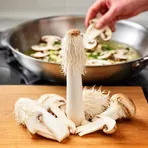
A common white mushroom with a long shaggy cap that people eat

A common edible mushroom with a tall, shaggy white cap that turns black as it ages
Surface Forms
Morphology
Coprinus + comatus
This is a Latin scientific name (binomial) composed of a technical genus label and a Latin adjective not listed in the learner-facing dictionary; an average B1 learner who knows the English meanings of any recognizable parts would still not be able to infer 'a shaggy ink-cap mushroom' from 'Coprinus comatus'. Species names are lexicalized and language-specific, and the adjective 'comatus' is not a familiar English word, so the overall meaning is not derivable from the constituents.
Etymology
Coprinus comatus comes from two older words: Coprinus means 'of dung' and comatus means 'hairy'. This gives a clear picture, because the mushroom has a shaggy, hair-like white cap and often grows on animal droppings, so the name helps you remember what it looks like and where it is found.

