
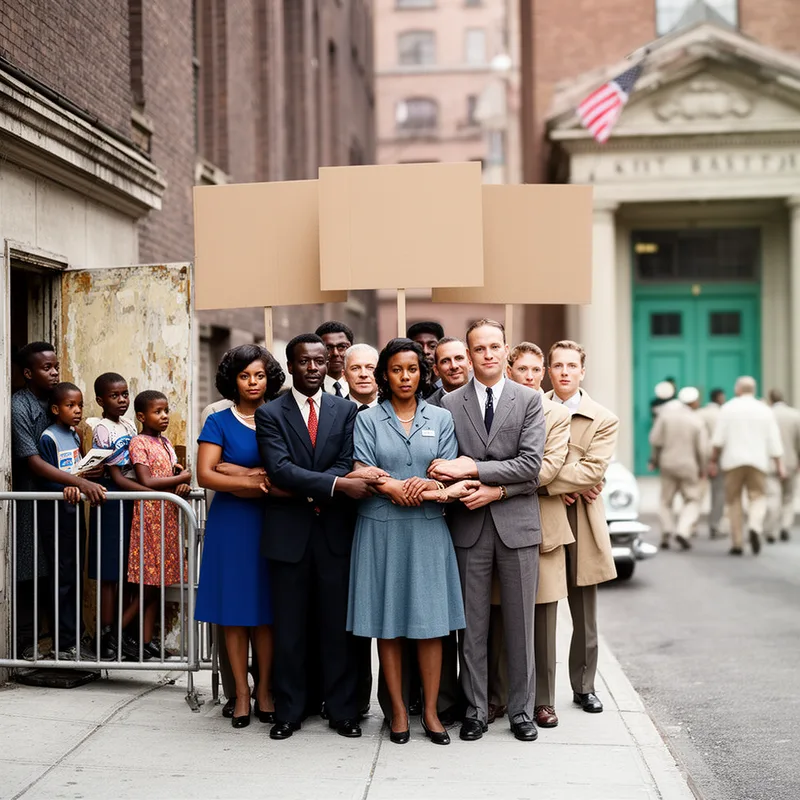
Congress of Racial Equality
 1
4.4

- proper noun
- James Farmer was one of the founders of the Congress of Racial Equality.
Examples
-
Many activists joined the Congress of Racial Equality to advocate for an end to segregation in public schools.
-
The Congress of Racial Equality organized sit-ins and marches to challenge discriminatory practices in the South.
-
Many activists joined the Congress of Racial Equality to protest against segregation in the 1960s.
-
The Congress of Racial Equality played a major role in the American civil rights movement.
-
The Congress of Racial Equality played a vital role in the civil rights movement.
-
Did the Congress of Racial Equality organize the Freedom Rides?
-
In the 1960s, the Congress of Racial Equality played a crucial role in the fight for racial justice in America.
Synonyms
 3
6.0
An American civil rights group founded in 1942 that promotes racial equality
Surface Forms
Morphology
congress + of + racial + equality
The name combines clearly interpretable parts: 'congress' (a formal assembly/organization) plus 'racial equality' (equal rights between races), so a learner can infer it refers to an organization advocating racial equality. While specific historical/cultural details (the US civil-rights group founded in 1942) require background knowledge, the basic referent is compositional and recoverable from the constituents.
Etymology
Congress of Racial Equality creates a clear image: Congress suggests a large meeting or group and Racial Equality names the goal, so you can picture people coming together for equal rights. That's why the name means a group of activists working 'to end segregation and discrimination' and to win equal treatment.