
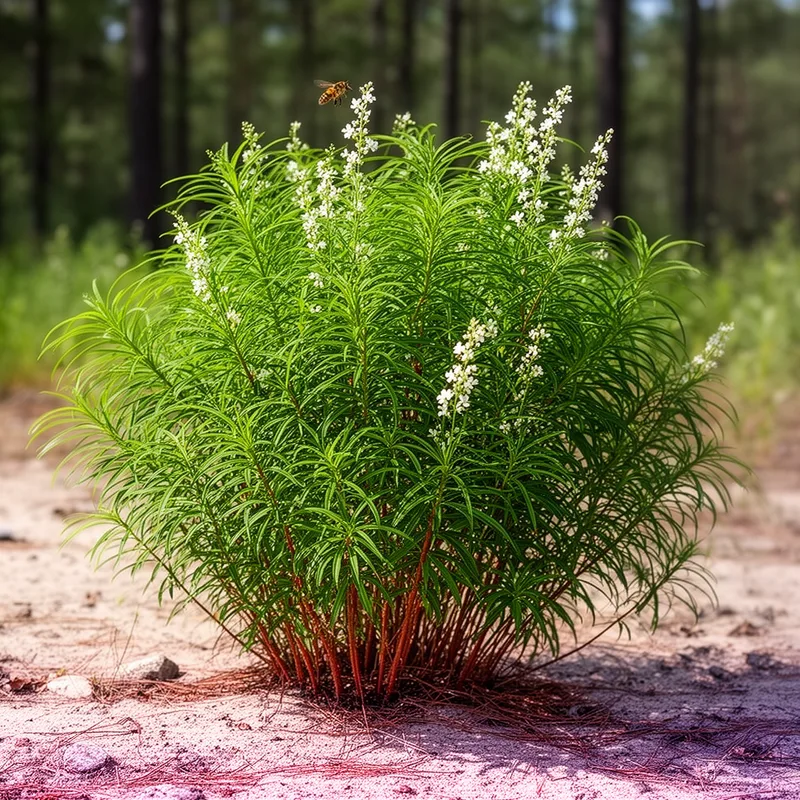
Comptonia peregrina
- noun
- Specialized
 :
Comptonia peregrina
:
Comptonia peregrina
- The sweetfern, or Comptonia peregrina, thrives in sandy, well-drained soils near pine forests.
Examples
-
The Comptonia peregrina adds a lovely fragrance to native gardens in the eastern United States.
-
Botanists often recommend planting Comptonia peregrina to attract pollinators and enrich the soil.
-
Look at that beautiful Comptonia peregrina!
-
I found a Comptonia peregrina while hiking in the woods.
-
The Comptonia peregrina is known for its sweet aroma, making it a popular choice for gardeners looking to attract beneficial insects.
-
In the wild, Comptonia peregrina can often be found growing alongside other native plants in sandy, northeastern soils.
-
Many people enjoy the lovely scent of Comptonia peregrina during the summer months when its leaves are fully developed.
Synonyms
A small shrub from eastern North America with sweet-smelling fern-like leaves and small white flowers

A low shrubby plant with fern-like leaves that smell sweet, from North America
Surface Forms
Morphology
Comptonia + peregrina
This is a Latin binomial (genus + species): knowing 'Comptonia' as an aromatic shrub genus lets a learner infer the phrase refers to a particular species of that shrub. However, the specific common name 'sweetfern' and the detailed descriptive sense are not derivable from the epithet (and 'peregrina' is not transparently meaningful), so the exact meaning is not fully predictable to a B1 learner.
Etymology
The name Comptonia peregrina may come from how the plant looks and smells: people call it 'sweetfern' because its narrow, fern-like leaves give a sweet scent when crushed, and the species word peregrina comes from Latin and means 'wanderer' or 'from far away'. So the name helps you remember the shrub's sweet-smelling, fern-like leaves and wide spread.

