
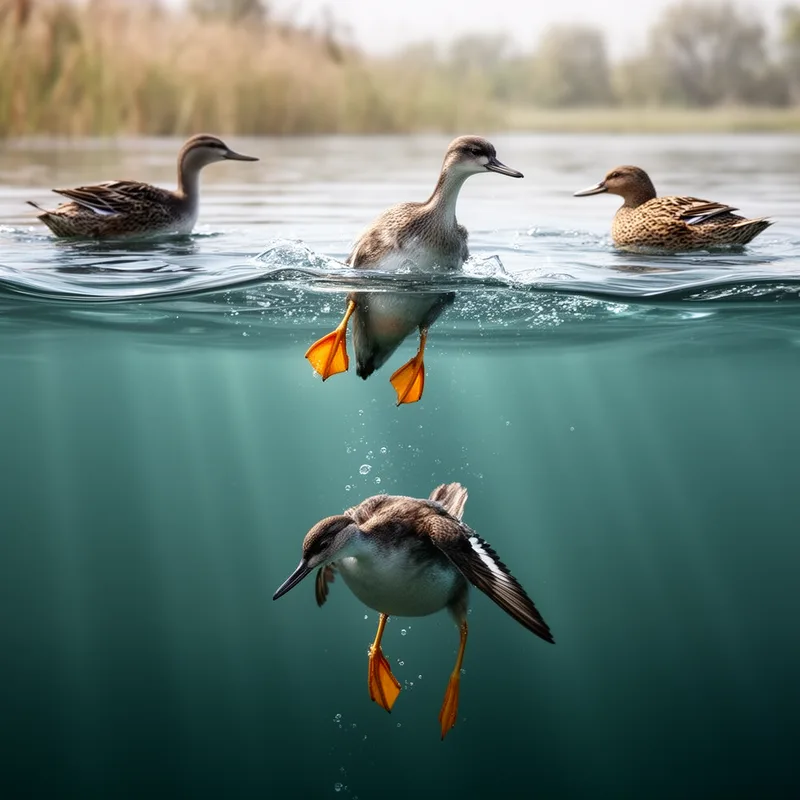
Colymbiformes
- noun
- /kəˌlɪmbɪˈfɔrmiz/
- Specialized
- The Colymbiformes are adapted to life on the water, with unique lobed feet.
Examples
-
Taxonomists once classified all grebes within the order Colymbiformes.
-
During the summer, many lakes are home to Colymbiformes that dive frequently for fish.
-
Ornithological studies of Colymbiformes have revealed fascinating diving behaviors.
-
The Colymbiformes are fascinating birds to observe.
-
Have you ever seen a Colymbiformes in the wild?
-
The Colymbiformes are known for their ability to swim gracefully under the surface.
-
Birdwatchers often seek Colymbiformes in wetlands due to their unique swimming skills.
Synonyms
A group of water birds like grebes with special toes that help them dive to catch fish
A group of water birds called grebes that dive to swim and catch food
A group of water birds like grebes that swim and dive
Surface Forms
Morphology
Colymbiformes = colymb + iformes
This is a classical taxonomic term built from a non-English root plus the order suffix -iformes, so its meaning is not transparent to an average learner.
Etymology
Colymbiformes comes from the Greek root colymbi- meaning 'diver', the same idea as the English word 'dive', and the ending -formes meaning 'shape' or 'form'. So Colymbiformes literally means 'diver-shaped birds', which fits because these grebes are expert swimmers and divers.

