
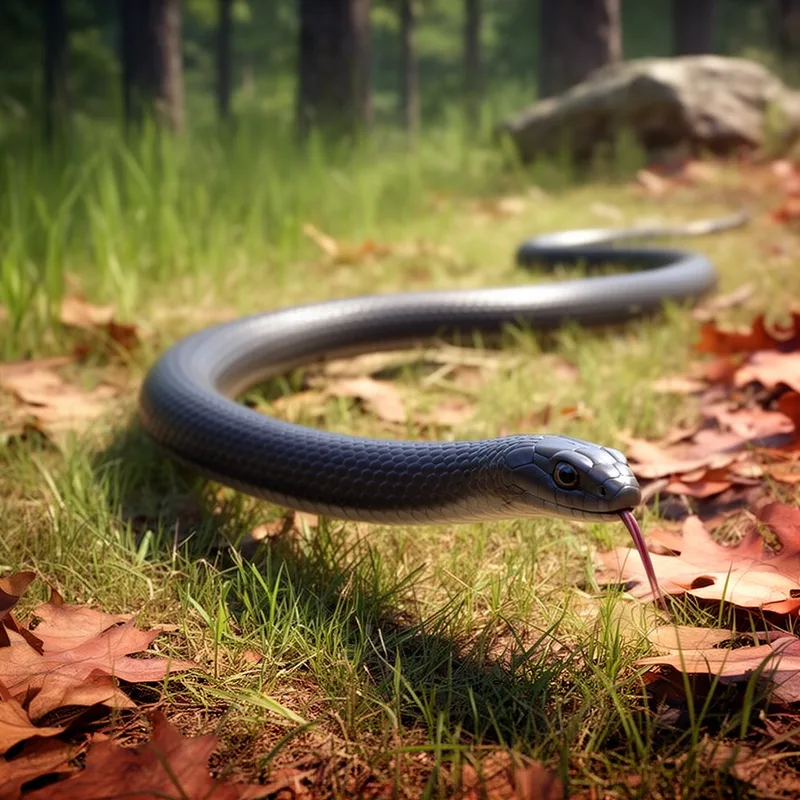
Coluber constrictor
- noun
- /ˈkoʊlʊbər kənˈstrɪktər/
- Specialized
- Unlike venomous snakes, the Coluber constrictor subdues its food by quickly overpowering it.
Examples
-
Wildlife enthusiasts often spot the Coluber constrictor basking in the sun on rocks or logs.
-
The Coluber constrictor can move rapidly through fields and forests to hunt its prey.
-
The Coluber constrictor is often seen in gardens.
-
Many people mistake the Coluber constrictor for a venomous snake.
-
The Coluber constrictor is known for its agility as it swiftly glides through the grass in search of food.
-
A Coluber constrictor can be identified by its sleek body and dark coloration, making it an impressive sight in its natural habitat.
-
When encountering a Coluber constrictor, you may notice it quickly disappears into the underbrush to avoid detection.
Synonyms


 1
8.2
1
8.2
A thin fast snake found in North America that is not venomous

A fast black snake that is not venomous and lives in the eastern United States
Surface Forms
Morphology
This binomial is compositional and taxonomic: 'Coluber' names the genus (a type of racer snake) and 'constrictor' describes a snake that constricts its prey, so together they denote a particular species of non-venomous snake. The name is literal rather than idiomatic, so a learner who knows the constituent meanings can infer the MWE's referent.
Etymology
Coluber constrictor may come from old Latin words: coluber meaning 'snake' and constrictor meaning 'one who squeezes'. One popular story says people used this name after seeing a slim, fast snake grab and hold its prey, so the name gives the image of a quick snake that overpowers its food and helps you remember this non-venomous species.