
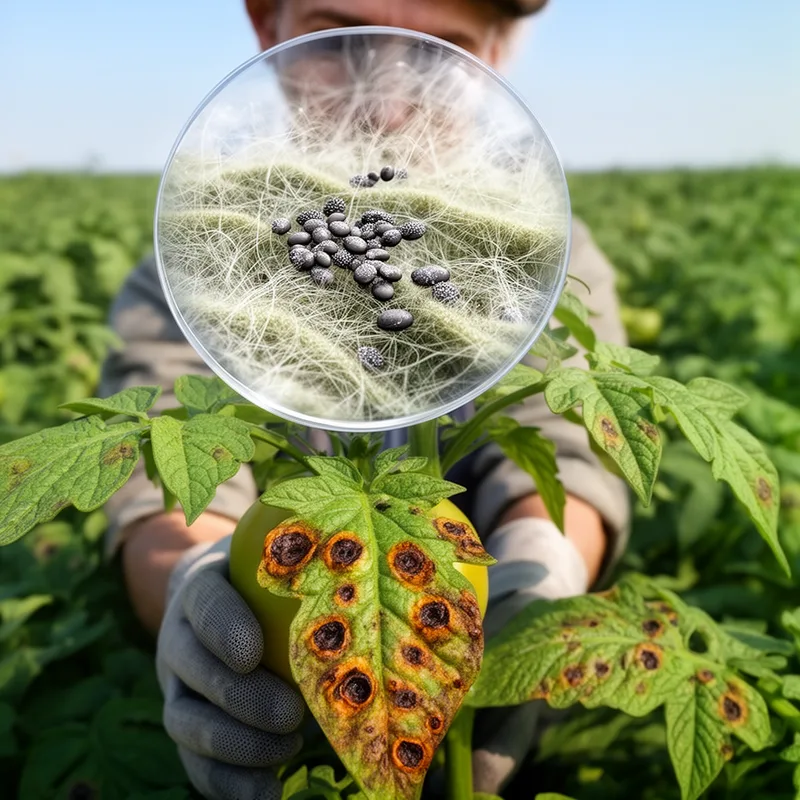
Colletotrichum
- proper noun
- Specialized
- The Colletotrichum fungus is often responsible for causing anthracnose, which affects various plants.
Examples
-
Researchers found that Colletotrichum species can significantly reduce crop yields when not properly managed.
-
Farmers are advised to monitor their fields for signs of Colletotrichum infections to prevent disease outbreaks.
-
The language they use to discuss genera with names like Phomopsis, Colletotrichum, and Cryphonectria, plus thousands of others and their associated species, is critical to efforts to solve agricultural problems.
Academic text (2004) -
PHOTO: Over 90 percent control of hemp sesbania was achieved in this four-row soybean plot, the two center rows of which were treated with Pesta containing Colletotrichum truncatum fungus.
Academic text (1994)
Surface Forms
Etymology
Colletotrichum can be split into parts that suggest 'sticky' and 'hair': the ending -trichum comes from a root meaning 'hair', and the first part recalls a word for something 'sticky'. One helpful way to remember it is to picture 'sticky, hair-like' growths on leaves and fruit, which fits this fungus that causes plant diseases.

