
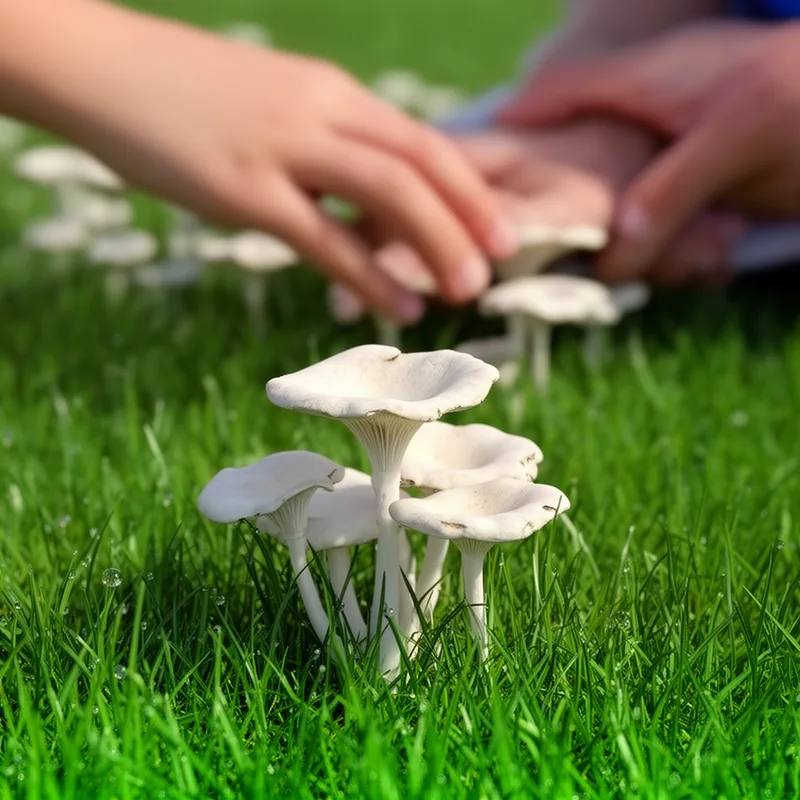
Clitocybe dealbata
- noun
- Specialized
- The pale, dry cap of Clitocybe dealbata can be mistaken for edible mushrooms by the untrained eye.
Examples
-
Children should be taught to avoid picking Clitocybe dealbata, as it is dangerously poisonous.
-
Experts warn that Clitocybe dealbata often grows in lawns and meadows across Europe.
-
The Clitocybe dealbata is often mistaken for edible mushrooms.
-
Many people are unaware that Clitocybe dealbata is highly toxic.
-
It is crucial to recognize that Clitocybe dealbata can cause severe illness if ingested.
-
The toxic nature of Clitocybe dealbata makes it essential for foragers to learn about its appearance.
-
Park rangers provide information about Clitocybe dealbata to ensure that visitors do not accidentally consume this poisonous mushroom.
Surface Forms
Morphology
Clitocybe + dealbata
This is a Latin binomial (a lexicalized scientific name) rather than a compositional English phrase; a B1 learner who knows the gloss 'Clitocybe' as a type of fungus still cannot infer the species meaning or toxicity because 'dealbata' is not an English word and gives no predictable cue. Species epithets and taxonomic names are language-specific labels rather than transparent combinations of common words, so the meaning is not derivable from the parts.
Etymology
Clitocybe dealbata names a small mushroom with a pale, dry cap that often grows in lawns and meadows. Picture a tiny white cap in the grass that looks 'edible' but is actually 'poisonous', so remember it as the pale mushroom to avoid.

