
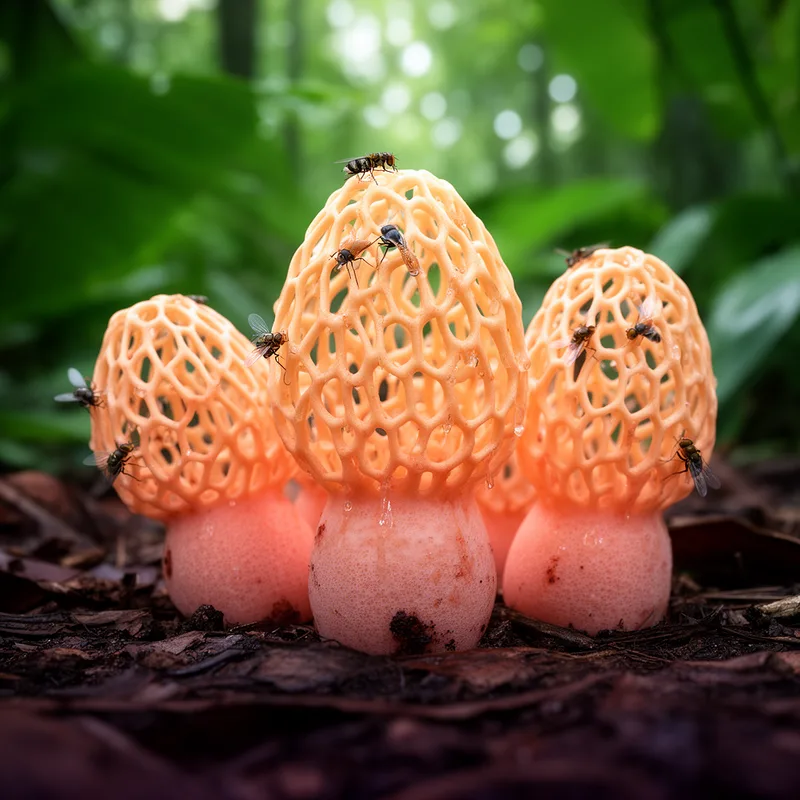
Clathraceae
- noun
- /klæθˈreɪʃiˌi/
- Specialized
- The Clathraceae are known for their distinctive, lattice-like fruiting bodies.
Examples
-
Members of the Clathraceae family often emit a strong odor to attract insects.
-
Recent studies have identified several new species within the Clathraceae.
-
The Clathraceae family includes many unique species.
-
Have you ever seen a Clathraceae in the wild?
-
The Clathraceae family of fungi is often found in rainforests where they thrive in moist conditions.
-
Many species of Clathraceae can be identified by their unusual shapes and strong smells.
-
In tropical regions, the Clathraceae play a vital role in the ecosystem by decomposing organic matter.
Synonyms
A group of soft mushrooms that look like stinkhorns and have a strong smell
Compounds
- Specialized
A group of soft mushrooms that look like stinkhorns and have a strong smell
Surface Forms
Morphology
Clathraceae = Clathrus (opaque) = Clathrus + aceae
The name is a specialized taxonomic formation (genus name + the Latin family suffix '-aceae') that is not transparently meaningful to general English learners.
Etymology
Clathraceae comes from the old root clathr- meaning 'lattice' and the family ending -aceae meaning 'family' in plant names. That's why these fungi, which make a cage- or net-like shape, are called Clathraceae.

