
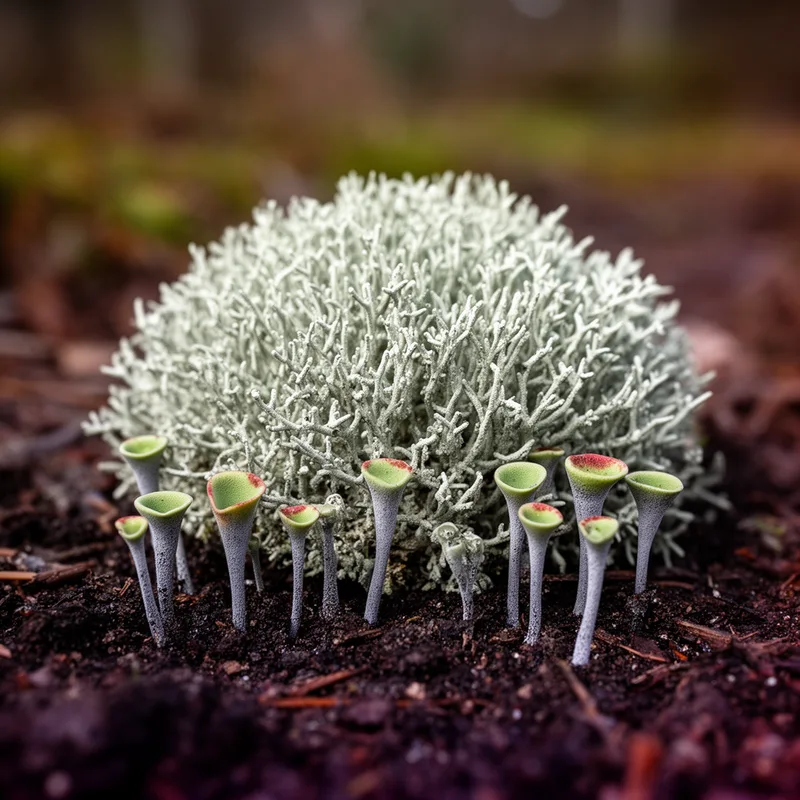
Cladoniaceae
- noun
- /klæˌdoʊniˈeɪsiˌi/
- Specialized
- The Cladoniaceae family is best known for containing reindeer moss, vital to Arctic ecosystems.
Examples
-
Several species within the Cladoniaceae are important indicators of air quality due to their sensitivity to pollution.
-
Scientists are studying the diversity of Cladoniaceae in boreal forests to understand environmental change.
-
The Cladoniaceae family includes various species of lichens.
-
Many researchers study Cladoniaceae for their ecological importance.
-
Scientists are studying the diversity of Cladoniaceae in boreal forests to understand environmental change.
-
Several species within the Cladoniaceae are important indicators of air quality due to their sensitivity to pollution.
-
The Cladoniaceae family is best known for containing reindeer moss, vital to Arctic ecosystems.
Surface Forms
Morphology
Cladoniaceae = Cladonia (opaque) = cladoni + aceae
The suffix '-aceae' is a specialized botanical family-forming element; recognizing the family name requires domain-specific knowledge rather than general English morphology.
Etymology
Cladoniaceae comes from the lichen name Cladonia, which itself comes from the Greek root klados meaning 'branch', and the ending -aceae shows it is a plant family, like Rosaceae for roses. So the name helps you remember this family contains lichens with branch-like, mossy or cup shapes.

