
Cineraria maritima
- noun
- Specialized
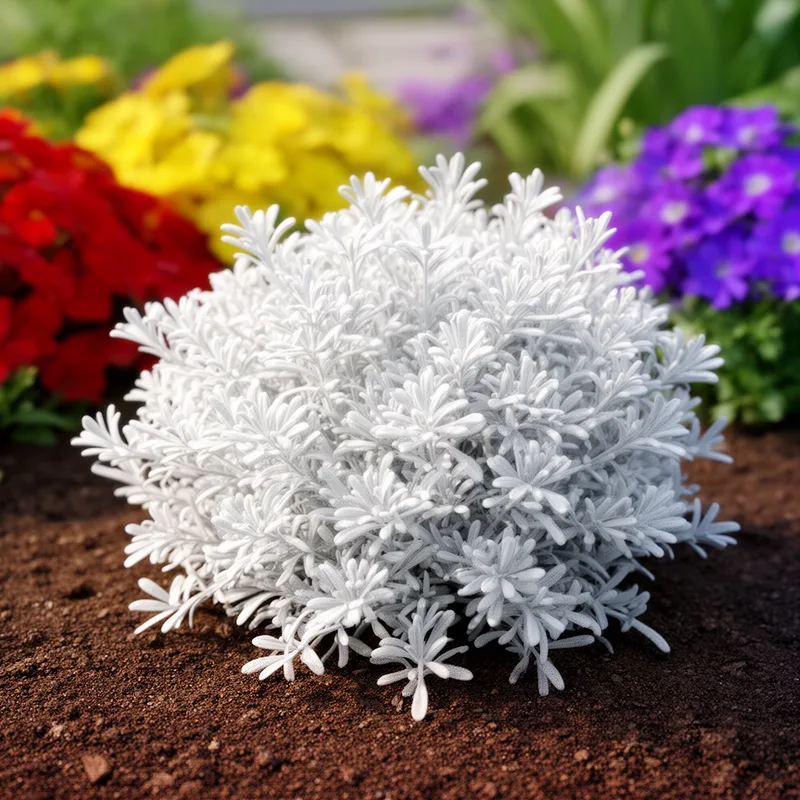
- The white woolly leaves of Cineraria maritima contrast beautifully with brightly colored flowers.
Examples
-
Gardeners often choose Cineraria maritima for its striking silver foliage in landscape designs.
-
Cineraria maritima thrives in full sun and well-drained soils near the coast.
-
The Cineraria maritima thrives in sunny gardens.
-
Have you seen the Cineraria maritima in bloom?
-
Many gardeners appreciate Cineraria maritima for its attractive silver leaves that enhance garden aesthetics.
-
In coastal areas, Cineraria maritima is favored for its ability to withstand dry conditions and thrive in bright sunlight.
-
The fuzzy white leaves of Cineraria maritima make it a popular choice for adding texture to ornamental plantings.
Synonyms

A Mediterranean plant with soft silver leaves grown for decoration

A garden plant with soft silvery leaves used for decoration
Surface Forms
Morphology
cineraria + maritima
This is a scientific Latin binomial (a species name) rather than a compositional everyday phrase; one constituent ('maritima') is not a common English word in the entry and the specific ornamental/leaf characteristics are specialized botanical information. Even if a learner recognised 'maritima' as related to 'maritime', the full descriptive meaning (perennial Mediterranean plant with white woolly leaves) is not derivable from the parts, so it would not be predictable to a B1 learner.
Etymology
Cineraria maritima comes from old Latin words: Cineraria from 'ash' because the leaves look pale and woolly, and maritima from 'by the sea' because it often grows near the coast. So the name gives a simple picture — silver, ash-colored leaves and a plant that likes the seaside.

