

Cinclidae
- noun
- Specialized
- Members of the Cinclidae are often seen diving into cold mountain streams in search of insects.
Examples
-
The Cinclidae family includes several species of dippers.
-
The Cinclidae can be seen perched on rocks by fast-flowing streams, ready to plunge into the water.
-
Ornithologists have extensively studied the breeding behavior of the Cinclidae.
-
The family Cinclidae is unique among passerine birds for its aquatic habits.
-
I spotted a Cinclidae while hiking near the river.
-
During spring, many Cinclidae gather near rivers to build their nests among the stones.
-
While hiking along the riverbank, I observed a Cinclidae skillfully catching small fish.
Synonyms


 1
9.1
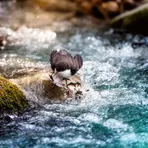
A small strong bird that lives by fast streams and dives for insects
 1
9.5
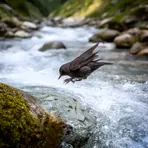
A small, strong bird that lives by fast streams and dives into water to get food

A group of small birds that live by fast streams and dive for insects
Compounds
- Specialized
A group of small birds that live by fast streams and dive for insects
Surface Forms
Morphology
Cinclidae = Cinclus (opaque) = Cinclus + idae
The formation uses a specialized scientific family suffix '-idae' attached to a genus name, which is not productive or meaningful to general learners.
Etymology
Cinclidae comes from the old Greek word kinklos, which meant 'a small water bird'. A helpful way to remember it is that this is the scientific name for the dippers, birds that dip into fast streams to find food, so the name points to their water-hunting way.