
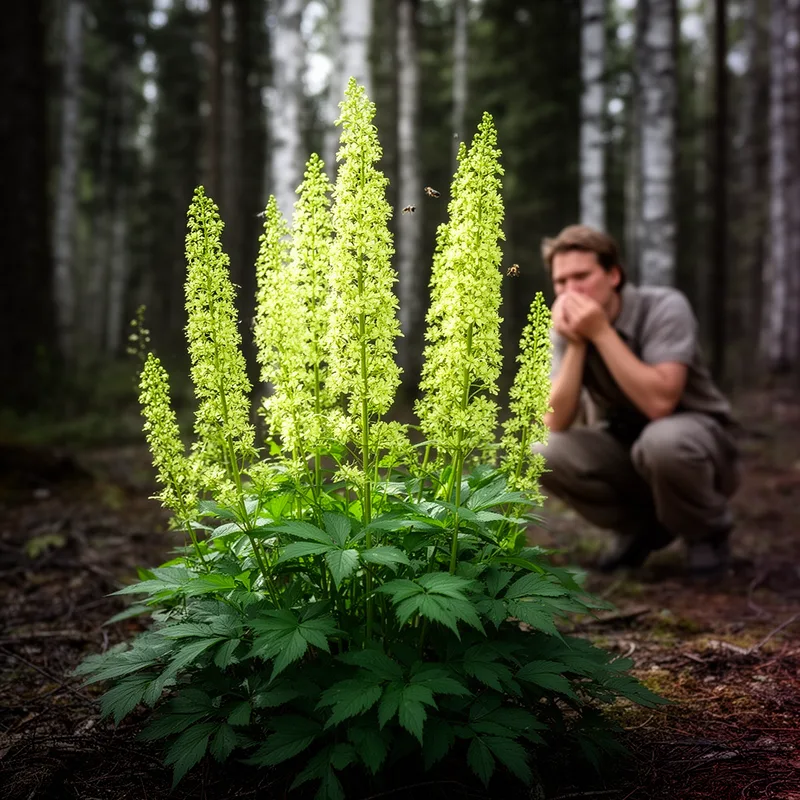
Cimicifuga foetida
- noun
- Specialized
- Gardeners are sometimes deterred by the smell produced when Cimicifuga foetida blooms.
Examples
-
Cimicifuga foetida is often found growing wild in forests across Siberia.
-
Researchers study Cimicifuga foetida for its potential use in herbal medicine.
-
The Cimicifuga foetida is known for its unique flowers.
-
Many gardeners appreciate the Cimicifuga foetida for its hardiness.
-
The strong odor emitted by Cimicifuga foetida can be off-putting to some people.
-
Cimicifuga foetida grows well in shady areas of the forest.
-
During the summer, the flowers of Cimicifuga foetida bloom, attracting various insects.
Synonyms

A plant with green and white flowers that smell very bad
Surface Forms
Morphology
Cimicifuga + foetida
This is a Latin binomial (genus + specific epithet) where the sense is compositionally derived: Cimicifuga (a herb) + foetida (Latin for fetid/ill‑smelling) would yield a smelly species of Cimicifuga. However, the epithet is a non‑English, specialist form and botanical naming conventions are domain‑specific, so a typical B1 learner—even if they know 'Cimicifuga' as a herb—would not reliably infer the precise meaning without prior exposure, making it only partially transparent.
Etymology
The plant name Cimicifuga foetida may come from old Latin words: cimex meaning 'bug' and fugare meaning 'to drive away', while foetida means 'smelly'. So the name paints the image of a 'smelly bug-repeller', which fits this Siberian plant because its flowers smell strong and it was said to keep insects away.

