
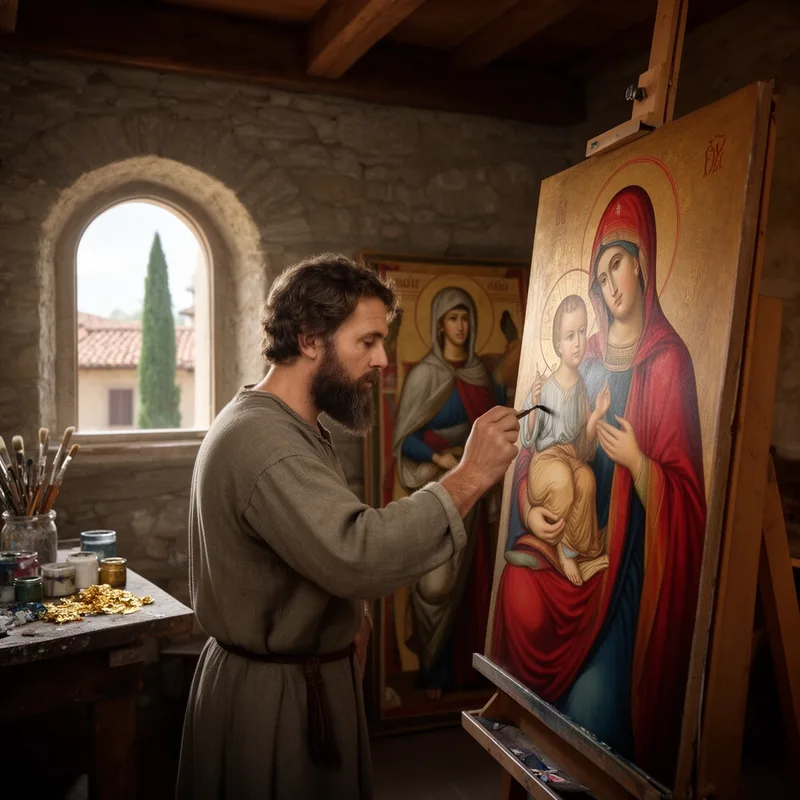
Cimabue


 1
9.9
- proper noun
- /ˌtʃɪməˈbuːeɪ/
- Cimabue was astounded and asked Giotto's father if he could take Giotto on as his apprentice.
- Cimabue and Giotto
Examples
-
The influence of Cimabue can be seen in the works of later artists like Giotto, who admired his approach to realistic representation.
-
The revival was begun by Cimabue and completed by Giotto, who equaled the ancient painters in fame and even surpassed them in skill and talent.
Academic text (1991) -
To be sure, Florence produced excellent artists in Cimabue and Giotto.
Academic text (1991) -
One day, the greatest Florentine painter Cimabue discovered Giotto drawing pictures of his sheep on a rock.
Blog text (15) -
Many fifteenth-century writers, for instance, contended that the origin of Florentine painting could be pinned down to that one historical moment when Cimabue discovered Giotto drawing some sheep in the hills north of Florence.
Academic text (2011) -
Cimabue is often regarded as a pivotal figure in the transition to the naturalistic style of the Cimabue Renaissance.
-
Many art historians celebrate Cimabue for his innovations that marked the beginning of modern painting techniques.
Surface Forms
Etymology
Cimabue is a nickname that probably comes from the Italian parts cima ('top') and bue ('ox' or 'bull'), so you can imagine a 'bull's head' as a strong, leading figure. That's a helpful image to remember him as an early painter who pushed art away from stiff, formal pictures toward more natural ones.