
Chytridiaceae
- noun
- /kɪˌtrɪdɪˈeɪsiˌi/
- Specialized
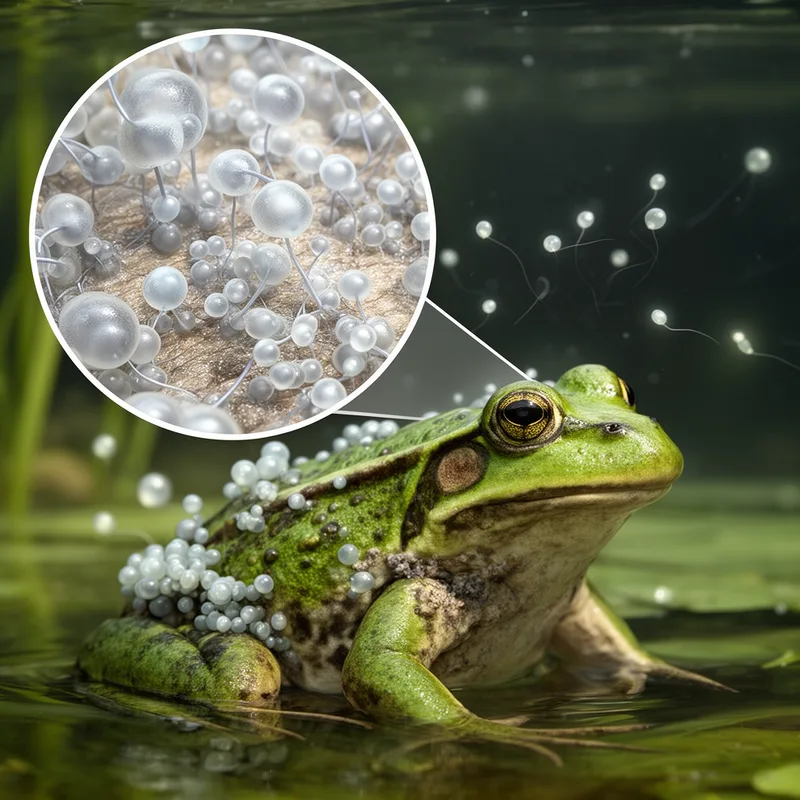
- The decline of amphibian populations has been linked to members of the Chytridiaceae.
Examples
-
Species in the Chytridiaceae family are known for their flagellated spores.
-
Species in the Chytridiaceae family are known for their role in nutrient cycling in water habitats.
-
Researchers are studying Chytridiaceae to understand the spread of fungal diseases in water habitats.
-
The Chytridiaceae family includes various aquatic fungi.
-
Researchers are studying the Chytridiaceae to understand their impact on ecosystems.
-
Researchers are studying Chytridiaceae to understand the spread of fungal diseases in aquatic ecosystems.
-
The decline of amphibian populations has been linked to pathogens from the Chytridiaceae family.
Surface Forms
Etymology
Chytridiaceae comes from the Greek chytridion, meaning 'little pot', because these fungi have small pot-shaped parts that produce spores. The ending -aceae means 'family', so Chytridiaceae is the 'chytrid' family of water fungi, a name that groups related species, some of which can harm frogs and other amphibians.

