

Chrysothamnus nauseosus
- noun
- Specialized
- The Navajo people traditionally use Chrysothamnus nauseosus to produce a yellow dye for textiles.
Examples
-
Many jackrabbits seek shelter among the dense branches of Chrysothamnus nauseosus during the hottest parts of the day.
-
Many artists use Chrysothamnus nauseosus to create natural dyes.
-
Chrysothamnus nauseosus is commonly found in arid regions across the western United States.
-
The Chrysothamnus nauseosus is commonly found in arid regions.
-
The Navajo people traditionally use Chrysothamnus nauseosus to produce a yellow dye for textiles.
-
Many artists use Chrysothamnus nauseosus to create natural dyes from its flowers.
-
Chrysothamnus nauseosus is commonly found in arid regions across the western United States.
Synonyms
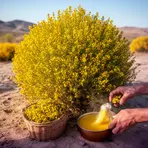
A scented shrub with many small yellow flowers that people use to make yellow dye
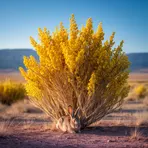
A shrub with thin hairy branches and bright yellow flowers that smells nice and grows on western plains
Surface Forms
Morphology
Chrysothamnus + nauseosus
This is a Latin binomial (scientific) name rather than a normal English phrase; an average B1 learner who knows 'Chrysothamnus' as a type of shrub but does not know the Latin epithet 'nauseosus' (or that species names are conventional labels) cannot derive the specific meaning (aromatic shrub with yellow flowers used as dye). The second element is a Latin adjective not transparently related to the described properties and may even mislead by resembling English 'nauseous', so the overall name is not compositionally interpretable by learners.
Etymology
The plant name Chrysothamnus nauseosus may come from old words chryso, meaning 'gold', and thamnus, meaning 'shrub', plus nauseosus, meaning 'sick', because the plant has bright yellow flowers and a strong smell. So the name works as a memory: it points to a yellow, smelly shrub often used to make a yellow dye.

