
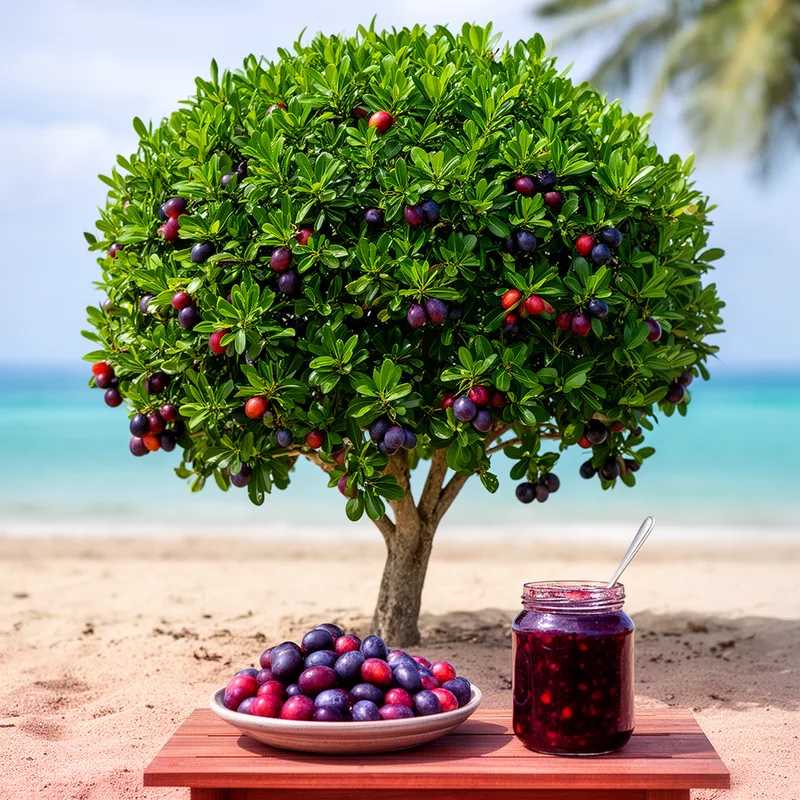
Chrysobalanus
- noun
- /ˌkrɪsəˈbælənəs/
- Specialized
- The fruit of Chrysobalanus is edible and often used to make jams in the Caribbean.
Examples
-
The fruit of Chrysobalanus, known as coco plums, is sweet and often used in desserts.
-
Chrysobalanus is commonly found in coastal regions where it thrives in sandy soils.
-
Botanists identified the specimen as a member of the Chrysobalanus genus due to its distinctive leaves.
-
The Chrysobalanus tree can grow up to 10 feet tall.
-
Many gardeners appreciate Chrysobalanus for its ornamental beauty.
-
Many gardeners appreciate Chrysobalanus for its beautiful foliage and adaptability to coastal landscapes.
-
In addition to its edible fruit, Chrysobalanus can be used for medicinal purposes by local communities.
Compounds

Surface Forms
Etymology
Chrysobalanus comes from the Greek parts chrysos ('gold') and balanos ('acorn' or 'berry'). The bold chrys- you see in chrysanthemum helps you imagine a 'golden berry', which fits this tropical shrub that has small, often yellowish edible fruit.

