
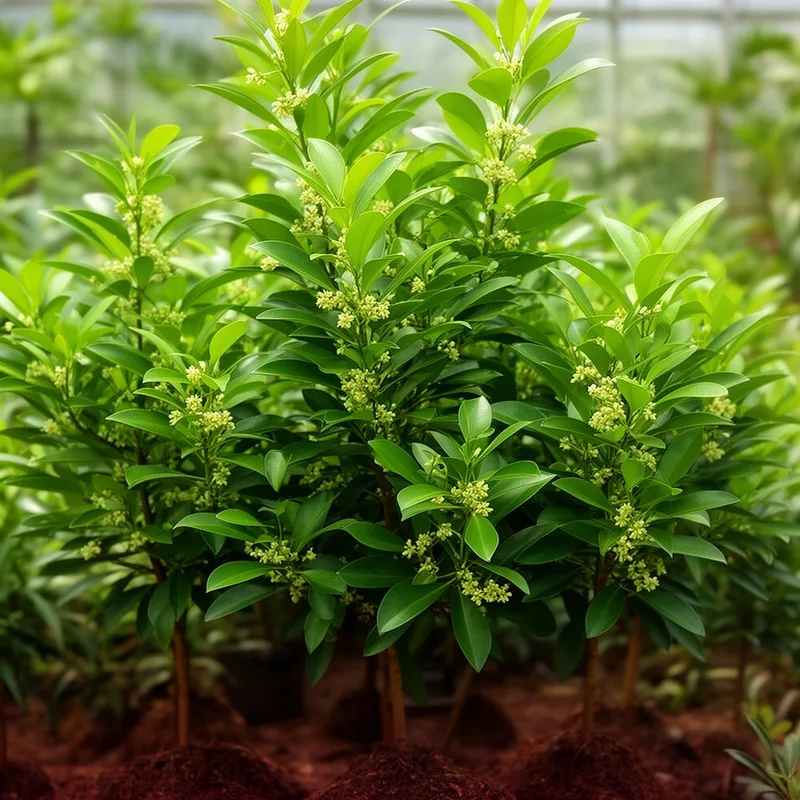
Chloranthaceae


 1
9.9
- noun
- /klɔːˈrænθəˌsiː/
- Specialized
- Many members of the Chloranthaceae are valued in traditional medicine across Asia.
Examples
-
The Chloranthaceae family includes various tropical plants.
-
Botanists have studied the evolutionary history of Chloranthaceae to understand flowering plant diversity.
-
The Chloranthaceae family includes a variety of aromatic tropical shrubs and trees.
-
Many species of Chloranthaceae are found in Southeast Asia.
-
The Chloranthaceae family includes various tropical plants with small, inconspicuous flowers.
-
Researchers are studying the Chloranthaceae to learn more about their evolutionary traits.
-
Among the plants in the Chloranthaceae are some herbs that thrive in warm, humid climates.
Surface Forms
Morphology
Chloranthaceae = Chloranthus (opaque) = chloranth + aceae
A specialized taxonomic family name formed from a genus stem plus the scientific suffix '-aceae', which is not informative to average learners.
Etymology
Chloranthaceae comes from three parts: chlor- meaning 'green', as in chlorophyll, -anth- meaning 'flower', and -aceae meaning 'family of plants'. So Chloranthaceae is like a 'green-flower' plant family, which fits these tropical herbs and shrubs that often have small greenish flowers.