
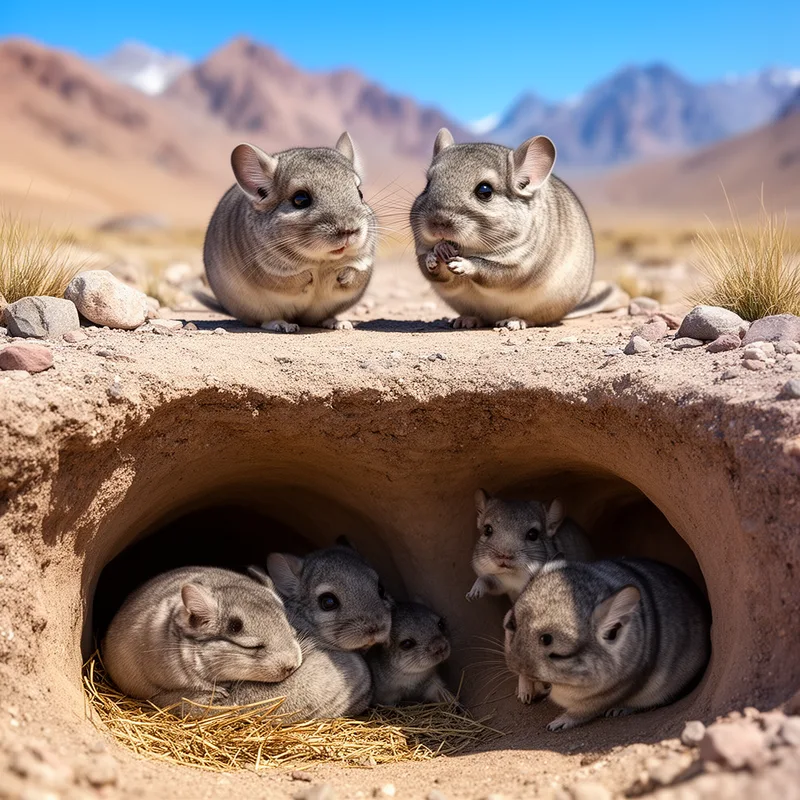
Chinchillidae
- noun
- /ˌtʃɪnˈtʃɪlɪdeɪ/
- Specialized
- Many members of Chinchillidae make extensive burrows in the arid regions of the Andes.
Examples
-
The Chinchillidae family includes both wild and domesticated species prized for their soft fur.
-
The Chinchillidae family includes several species of rodents.
-
Scientists are studying the evolutionary traits of Chinchillidae to better understand their adaptation to harsh environments.
-
Many people are fascinated by Chinchillidae due to their soft fur.
-
The family of Chinchillidae consists of small rodents that thrive in the high-altitude regions of South America.
-
Many species of Chinchillidae are known for their bushy tails and are found in the wild as well as in domestic settings.
-
Researchers are focused on the Chinchillidae family's unique adaptations that enable them to survive in harsh climates.
Synonyms
A group of small bushy-tailed animals that live in burrows in South America, including chinchillas
Compounds
- Specialized
A group of small bushy-tailed animals that live in burrows in South America, including chinchillas
Surface Forms
Morphology
Chinchillidae = chinchilla (semi-transparent) = chinchill + idae
Formed from the animal name 'chinchilla' plus the technical taxonomic suffix '-idae', which is a specialized scientific marker likely unfamiliar to average learners.
Etymology
The word Chinchillidae comes from chinchilla, the small Andean animal, plus the scientific ending -idae meaning 'family'. The name chinchilla came into Spanish from the name of the Chincha people or region in Peru for these soft-furred rodents, so Chinchillidae simply means the 'family of chinchillas' and points to these South American rodents.

