
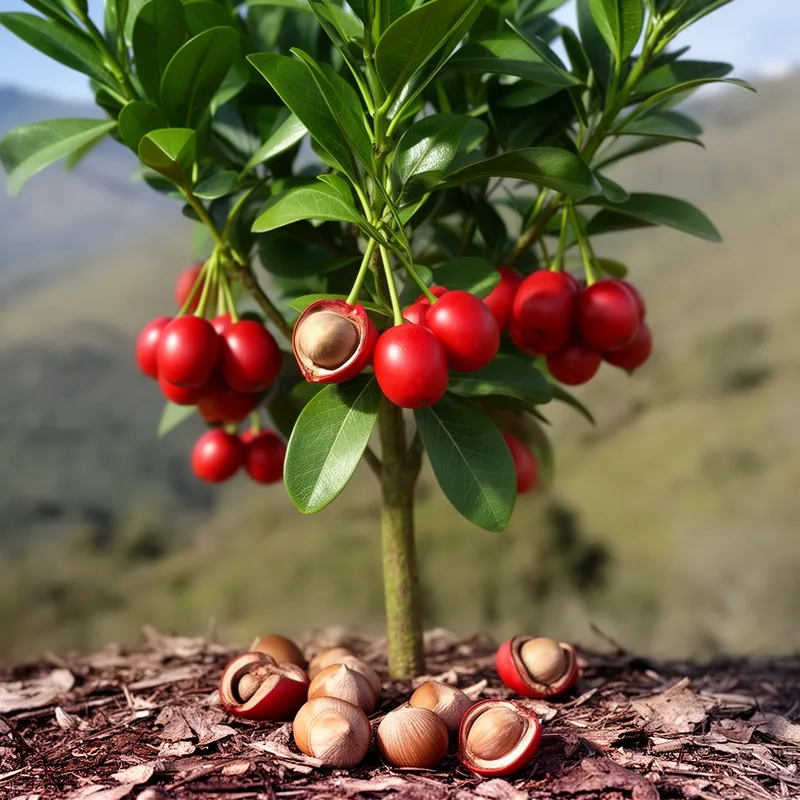
Chile hazel
- noun
- Specialized
 :
avellano chileno
:
avellano chileno
- The edible seeds of the Chile hazel are prized for their unique flavor.
Examples
-
The Chile hazel thrives in the temperate regions of central Chile.
-
Many gardeners appreciate the Chile hazel for its ornamental value.
-
Botanists travel to South America to study the Chile hazel and its distinctive fruit.
-
The Chile hazel is known for its unique fruit.
-
The edible seeds of the Chile hazel are prized for their unique flavor.
-
Botanists travel to South America to study the Chile hazel and its distinctive fruit.
-
The Chile hazel thrives in the temperate regions of central Chile.
Synonyms

A small Chilean bush that makes red fruit with edible seeds like hazelnuts

A Chilean shrub with coral red fruit and edible seeds like hazelnuts
A Chilean shrub that produces red fruit with an edible seed like a hazelnut

A shrub from Chile with red fruit and edible seeds like hazelnuts

Chilean shrub that makes red fruit with an edible seed like a hazelnut
Surface Forms
Morphology
The noun phrase combines a country name and a plant name (Chile + hazel) following a common nominal compounding pattern meaning 'a hazel from Chile' or a Chilean hazel plant. This composition is directly derivable from the constituents and matches cross-linguistic naming patterns for flora, so a B1 learner who knows both words would understand the referent.
Etymology
Chile hazel comes from two simple ideas: it is a 'shrub' that grows in Chile and it produces an 'edible seed' that looks and tastes like a hazel, a hazelnut. So the name tells you it is a Chilean shrub with a hazel-like, edible seed.

