
Chenopodiales
- noun
- /ˌkɛnəˈpoʊdiˌeɪliz/
- Specialized
- Researchers have conducted genetic studies on several species within the Chenopodiales.
Examples
-
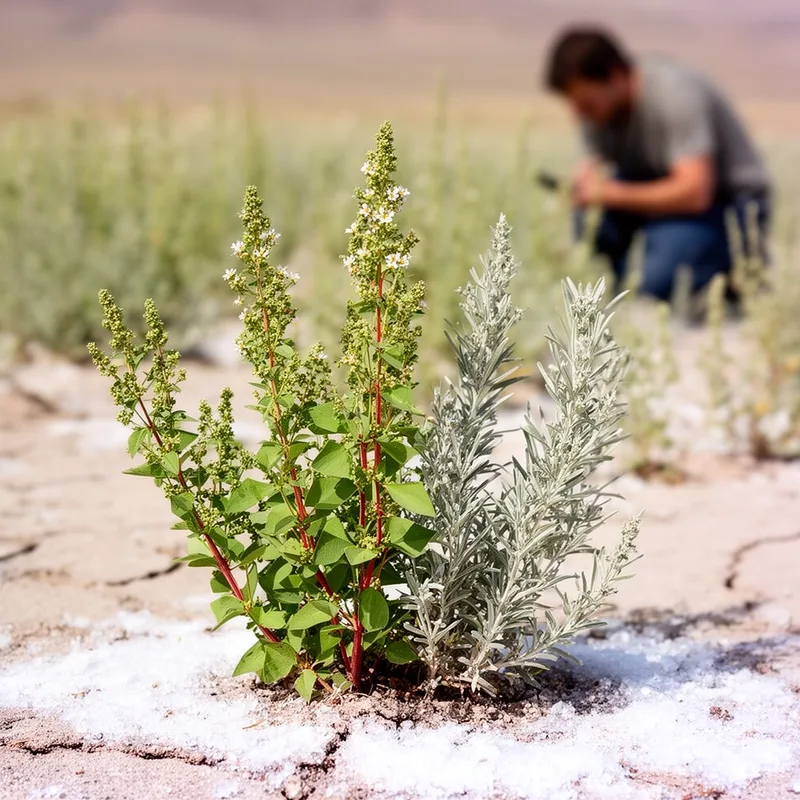
Many desert plants belong to the Chenopodiales due to their adaptation to saline soils.
-
The Chenopodiales order includes several important agricultural plants such as quinoa and amaranth.
-
Taxonomists recently reclassified some families from the Chenopodiales into new orders.
-
The Chenopodiales order includes many species of plants.
-
Did you know that Chenopodiales are often found in arid regions?
-
Plants in the Chenopodiales thrive in challenging environments like salt marshes and deserts.
-
Many species within the Chenopodiales are known for their nutritional value and drought resistance.
Synonyms



 1
9.9
A group of flowering plants that includes cacti, carnations, and amaranths

An old name for a group of flowering plants now called Caryophyllales
Surface Forms
Etymology
Chenopodiales comes from Greek parts chen meaning 'goose' and pod meaning 'foot', because some leaves look like a goose's foot. The ending -ales marks a plant order, so the name tells you it is a group of 'goose-foot' plants, including the goosefoot family.