
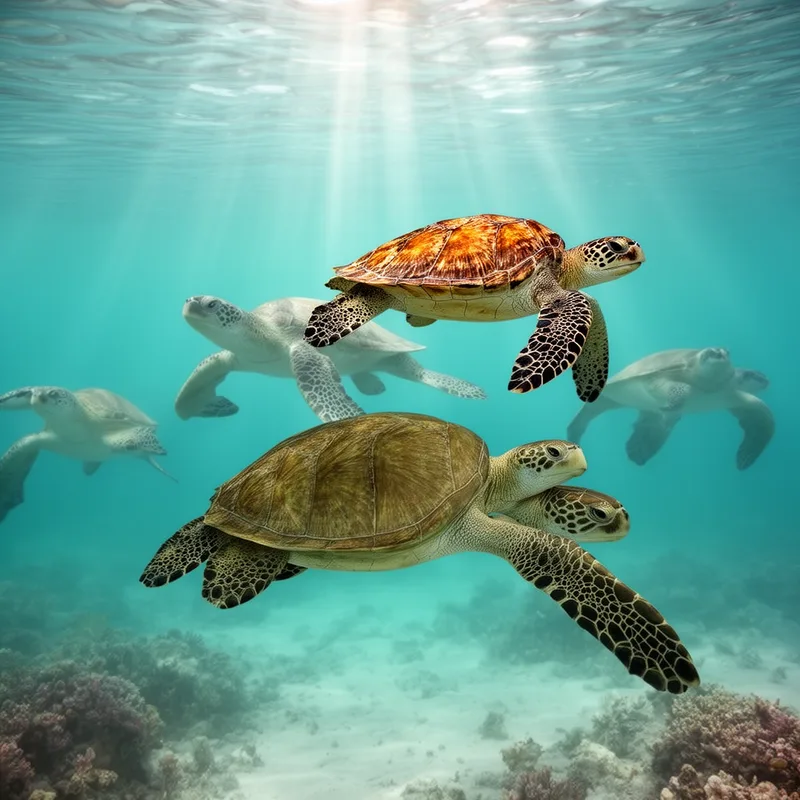
Chelonidae
- noun
- /kɛˈloʊnɪˌdeɪ/
- Specialized
- Species in the Chelonidae family, such as the green turtle, are found in tropical and subtropical waters worldwide.
Examples
-
The Chelonidae family is distinguished by their paddle-like limbs, perfectly adapted for life in the ocean.
-
Research on Chelonidae has contributed greatly to our understanding of marine turtle conservation.
-
Look at that Chelonidae!
-
The Chelonidae family includes species like the green turtle.
-
Research on Chelonidae has contributed greatly to our understanding of marine turtle conservation.
-
Species in the Chelonidae family include the green turtle, which is often found in tropical waters.
-
The Chelonidae family of turtles is known for their large size and long migrations across oceans.
Synonyms
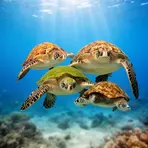
A group of sea turtles with hard shells, like green turtles and hawksbills
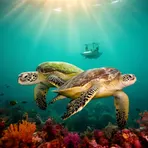
A family of large sea turtles like green turtles and hawksbills
Surface Forms
Morphology
Chelonidae = chelon + idae
A Latinized taxonomic formation: the combining form 'chelon-' is not a productive standalone English word and the suffix '-idae' is a scientific family ending, so the meaning 'family of turtles' is not derivable by an average learner from common English vocabulary.
Etymology
Chelonidae comes from the old Greek root chelon meaning 'tortoise' or 'sea turtle', and the ending -idae shows a family or group of animals. So Chelonidae literally means 'the turtle family', which is why it names the group of large marine turtles like the green and hawksbill.

