

Chelone glabra
- noun
- /kəˈloʊni ˈɡlæbrə/
- Specialized
- The Chelone glabra is often found growing naturally in damp meadows and wetlands.
Examples
-
Botanists observed that Chelone glabra attracts various pollinators, including bees and butterflies.
-
In summer, the Chelone glabra blooms, showcasing its striking white flowers.
-
Because of its unique flowers, Chelone glabra is often used in native plant landscaping.
-
The Chelone glabra thrives in moist, shaded gardens with rich soil.
-
Look at that gorgeous Chelone glabra by the pond!
-
What a beautiful Chelone glabra!
-
Gardeners recommend planting Chelone glabra in areas with plenty of moisture and shade.
Synonyms
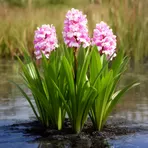
 2
9.9
2
9.9

A marsh plant with waxy long leaves and showy pink and white flowers


 1
9.8
1
9.8
A plant that grows in wet places with white and pink flowers
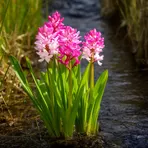
A colorful plant that grows in marshes with waxy long leaves and pink and white flowers
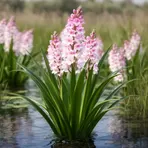
A wetland plant with waxy long leaves and showy pink to white flowers
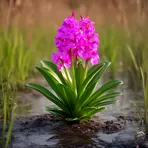
A plant with shiny leaves and bright flowers that grows in marshes
Surface Forms
Morphology
Chelone + glabra
This is a botanical Latin binomial (genus + specific epithet) rather than a compositional English phrase, so knowing the surface constituents does not give a B1 learner the ordinary English meaning 'white turtlehead.' The second element 'glabra' is not an English lexical item (its Latin sense 'smooth' is specialist knowledge), making the name effectively unpredictable and opaque to average learners.
Etymology
Chelone glabra comes from two old words: Chelone, from a Greek word for 'turtle', and glabra, a Latin word meaning 'smooth'. Because the flower looks like a small turtle's head, people call it 'white turtlehead', so the name helps you picture the plant's shape and smooth look.