
Chartism


 1
9.9
- noun
- /ˈtʃɑrtɪzəm/
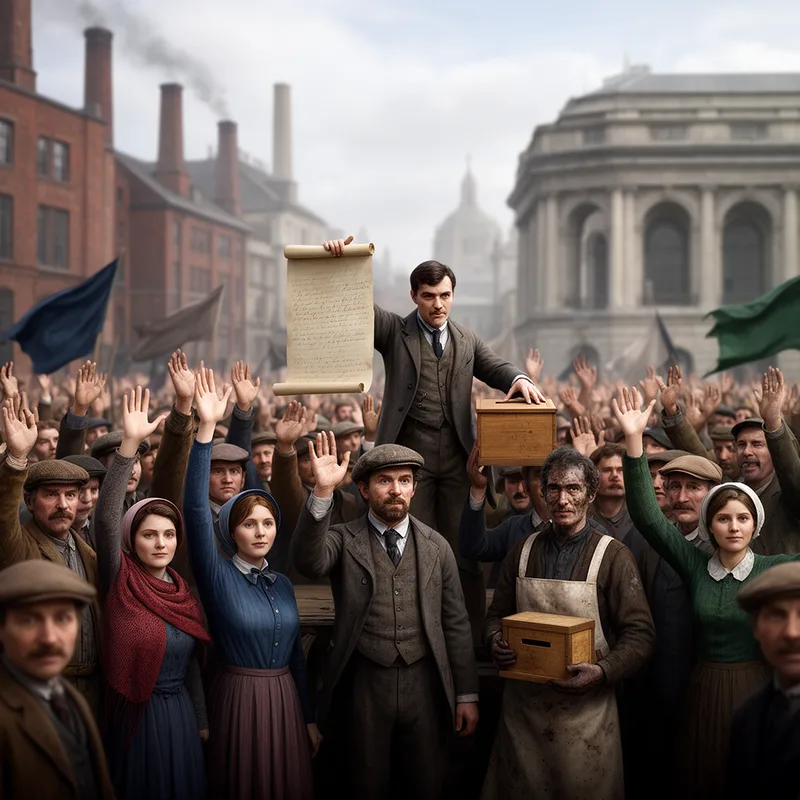
- The political movement of Chartism aimed to secure better rights for workers in 19th-century England.
Examples
-
The platform oratory that rallied and sustained Chartism as a mass movement was a "social action" rather than a communication in language, Pickering explains, especially since band music, laughter, cheering, and the sheer size of outdoor meetings often made speeches inaudible to most of those present.
Academic text (1998) -
Carlyle dismisses the political language of Chartism as the "clattering of ballot boxes."
Academic text (1998) -
But by 1876, Chartism was unlamented history.
Academic text (1998) -
But Gaskell herself presents a caricature of Chartism in her novel.
Academic text (1998) -
He proved to be a superintendent of the Wesleyan ministers of that district, and I doubt not a very estimable man for all his notions about Chartism.
Academic text (1998) -
Mainstream Victorian writers, even those most sympathetic to the working-class plight, pay little regard to the struggle for verbal enfranchisement central to Lovett's Chartism.
Academic text (1998) -
Cobbett's vision of a self-taught English grammar met overwhelming counter-insistence at the time of Chartism that inarticulate cries essentially defined working-class language.
Academic text (1998) -
Activists associated with Chartism fought for parliamentary reforms that would benefit the working class.
-
Many people believed that Chartism would bring about significant improvements in labor conditions.
Surface Forms
Etymology
Chartism gets its name from the charter called the 'People's Charter' and the ending -ism, which shows a belief or movement. So Chartism was the 19th-century political movement built around that document, asking for better rights and more real voting power for working people.