
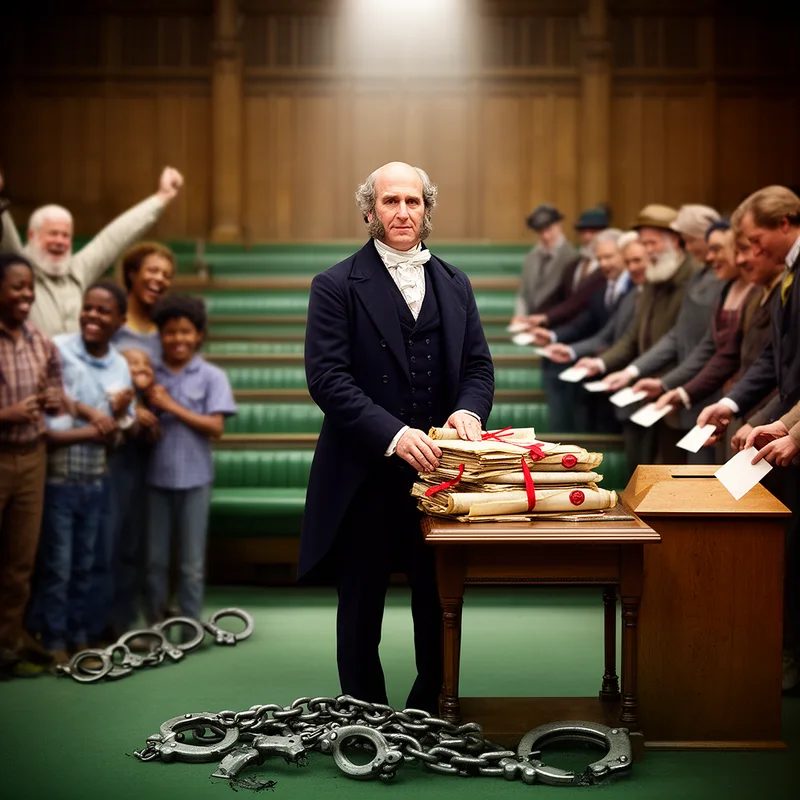
Charles Grey
- proper noun
- Charles Grey played a key role in abolishing slavery in the British Empire.
Examples
-
The Reform Act of 1832 was passed under the leadership of Charles Grey.
-
Did you know that Charles Grey was a British Prime Minister?
-
Many historians regard Charles Grey as a major architect of British modern democracy.
-
Charles Grey introduced important social reforms.
-
Charles Grey served as the British Prime Minister who led significant reforms including the abolition of slavery.
-
Historians often cite Charles Grey as a pivotal figure in shaping modern British democracy.
-
Under the guidance of Charles Grey, the Reform Act of 1832 was enacted, transforming the electoral system.
Surface Forms
Morphology
Charles + Grey
This is a proper name referring to a specific historical person (a British Prime Minister), so its referential meaning (identity, office, dates) is not derivable from the literal words 'Charles' and 'Grey'. Proper nouns are arbitrary labels rather than compositional expressions, so a B1 learner who knows the constituent words would not be able to infer the MWE's meaning.
Etymology
Charles Grey was a British 'Prime Minister' in the early 1800s who led big changes like the 'Reform Act' of 1832 and laws to end slavery. Picture him opening a large door so more people could join public life — that image helps explain why his name is remembered for those social changes.

