
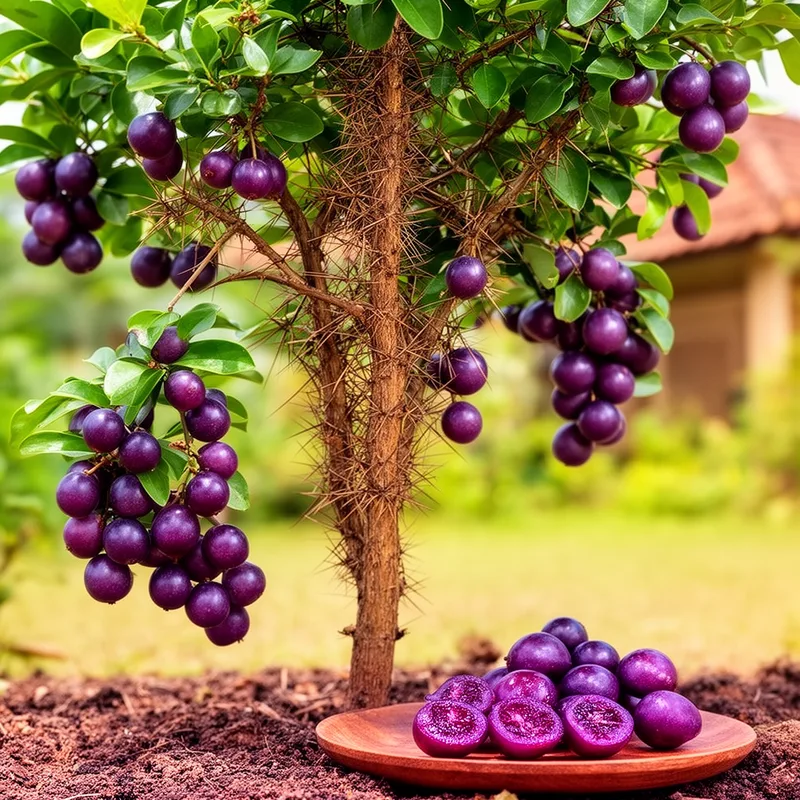
Ceylon gooseberry
- noun
- The Ceylon gooseberry is prized for its tart, purple fruit, often eaten fresh or made into jam.
Examples
-
Locals in Sri Lanka use Ceylon gooseberry fruit to prepare traditional desserts and drinks.
-
She decided to plant a Ceylon gooseberry in her garden for its attractive foliage and nutritious berries.
-
The Ceylon gooseberry tree thrives in tropical climates.
-
I love the taste of Ceylon gooseberries in desserts.
-
Locals in Sri Lanka use Ceylon gooseberry fruit to prepare traditional desserts and drinks.
-
The Ceylon gooseberry is prized for its tart, purple fruit, often eaten fresh or made into jam.
-
She decided to plant a Ceylon gooseberry in her garden for its attractive foliage and nutritious berries.
Synonyms

A small spiny shrub from India and Sri Lanka that produces dark red, tart fruit like a gooseberry

A small spiny tree from India and Sri Lanka that has dark purple fruit with sweet tart pulp
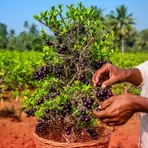
A small spiny shrub that grows in India and Sri Lanka and has dark purple fruit
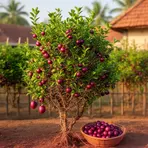
A small spiny shrub grown in India and Sri Lanka that produces maroon-purple fruit
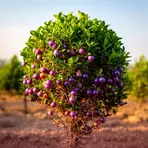
A small spiny shrub that makes sweet purple berries like gooseberries
Surface Forms
Morphology
The compound is transparently composed of the place-name 'Ceylon' (Sri Lanka) plus the noun 'gooseberry', so its meaning as a variety or species of gooseberry associated with Ceylon/Sri Lanka is directly inferable. Place-name + food/plant constructions are common cross-linguistically, so a B1 learner who knows both constituents would readily understand this MWE.
Etymology
Ceylon gooseberry gets its name from two simple ideas: Ceylon was the old name for 'Sri Lanka' and gooseberry shows that the fruit looks small and tart like a gooseberry. So the name helps you remember it is a small, bushy tree with sour, purple berries from Sri Lanka.

