
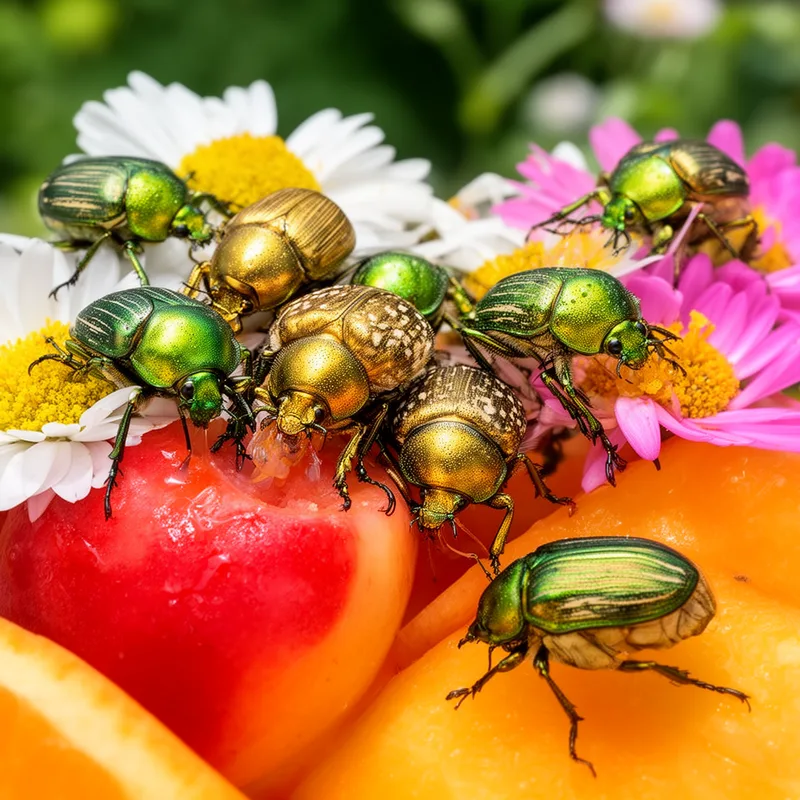
Cetoniidae
- noun
- Specialized
- The Cetoniidae are often found feeding on nectar and pollen in gardens.
Examples
-
Some species of Cetoniidae display striking metallic colors on their bodies.
-
Goliath beetles, a part of the Cetoniidae family, are among the largest insects in the world.
-
Look at that Cetoniidae on the rose!
-
The Cetoniidae family includes many species of colorful beetles.
-
Some species of Cetoniidae display striking metallic colors on their bodies.
-
The Cetoniidae are often found feeding on nectar and pollen in gardens.
-
Goliath beetles, a part of the Cetoniidae family, are among the largest insects in the world.
Surface Forms
Morphology
Cetoniidae = Cetonia (opaque) = cetoni + idae
The family-forming suffix '-idae' is a specialized scientific ending and the formation refers to a taxonomic genus stem, which is not transparent to an average B1 learner.
Etymology
Cetoniidae comes from the beetle name Cetonia plus the family ending -idae, which shows it is a family in scientific names. The name Cetonia is linked to an old root meaning 'whale', so a helpful way to remember Cetoniidae is to imagine these bright, sometimes very large beetles as the 'whales' of the insect world, like goliath beetles.

