
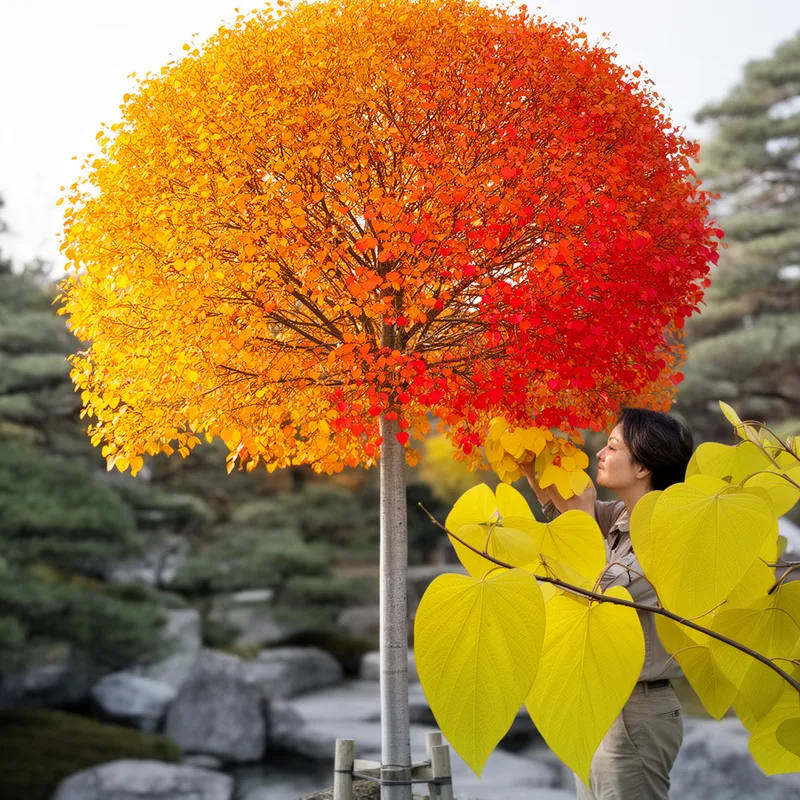
Cercidiphyllum japonicum
- noun
- Specialized
- Botanists appreciate the Cercidiphyllum japonicum for its unique heart-shaped leaves and sweet scent.
Examples
-
The autumn foliage of the Cercidiphyllum japonicum is renowned for its vivid colors.
-
They planted a Cercidiphyllum japonicum in the botanical garden to enhance its collection of Asian trees.
-
The Cercidiphyllum japonicum is known for its fragrant leaves.
-
Many gardeners prefer Cercidiphyllum japonicum for its beautiful fall colors.
-
Gardeners love the Cercidiphyllum japonicum because its leaves turn bright yellow and red in autumn.
-
The Cercidiphyllum japonicum, also known as the Katsura tree, produces sweet-scented leaves that attract many visitors.
-
In many parks, the Cercidiphyllum japonicum is planted for its fast growth and stunning seasonal colors.
Synonyms


 1
9.4
A tree from Japan and China with sweet smelling leaves that turn yellow to red in autumn
Surface Forms
Morphology
Cercidiphyllum + japonicum
This is a Linnaean binomial combining the genus name (Cercidiphyllum, a type of tree) with a Latinized species epithet (japonicum) that typically signals a Japanese origin; if a learner knows both parts they can infer it is a specific kind/variety of Cercidiphyllum from Japan. However, the species epithet is a Latin form and scientific naming conventions are not familiar to most B1 learners, so the meaning is only partially predictable rather than fully transparent.
Etymology
The name Cercidiphyllum japonicum comes from old scientific words: Cercidiphyllum means 'leaves like the redbud tree' and japonicum means 'from Japan'. The tree is often called 'katsura' and its leaves give a sweet, candy-like smell in autumn, so the name points to a Japanese tree known for its heart-shaped leaves and scent.