
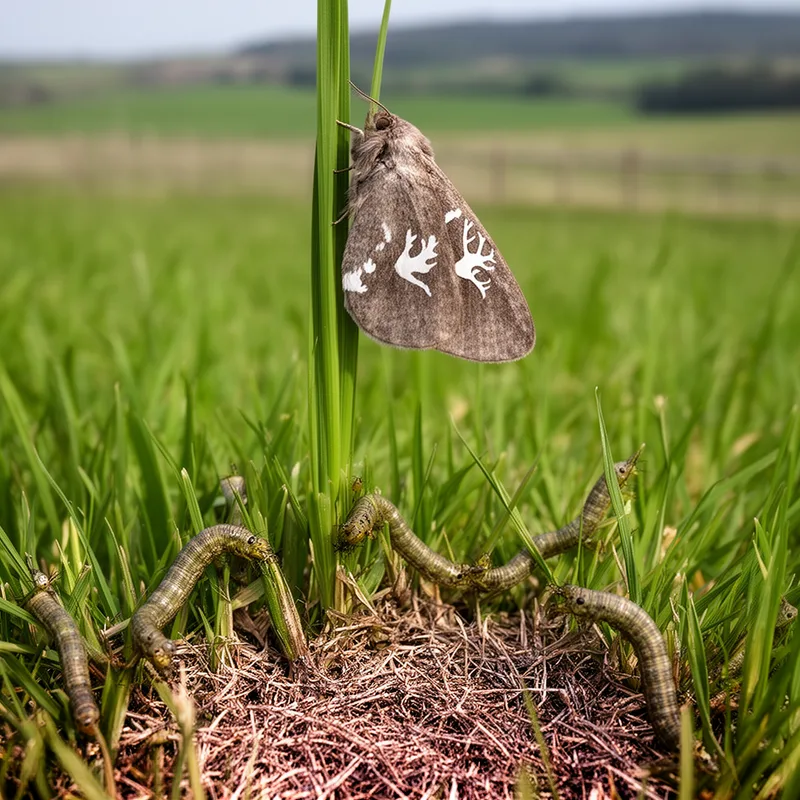
Cerapteryx graminis
- noun
- Specialized
- Farmers often fear the outbreak of Cerapteryx graminis, as the larvae can devastate valuable grassland.
Examples
-
The distinctive white markings of Cerapteryx graminis help entomologists identify this moth species.
-
Research into controlling Cerapteryx graminis populations is important for protecting European pastures.
-
The Cerapteryx graminis is often found in grassy areas.
-
Have you seen a Cerapteryx graminis before?
-
Farmers often fear the outbreak of Cerapteryx graminis, as the larvae can devastate valuable grassland.
-
Research into controlling Cerapteryx graminis populations is important for protecting European pastures.
-
The distinctive white markings of Cerapteryx graminis help entomologists identify this moth species.
Synonyms

A moth with white, branching marks on its front wings whose caterpillars eat grass
Surface Forms
Morphology
Cerapteryx + graminis
This is a Linnaean Latin binomial (scientific name) rather than a productive English phrase: both constituents are taxonomic/Latin forms, and the species epithet 'graminis' is a Latin genitive not part of everyday English. Because these parts are not ordinary English words and the compositional pattern is taxonomic (not semantic composition that B1 learners know), an average B1 learner would not be able to derive the meaning from the constituents.
Etymology
Cerapteryx graminis comes from old words meaning 'antler' and 'grass' because the moth has white, antler-like marks on its front wings and its caterpillars eat grass. That's why the name helps you remember the moth with antler marks whose caterpillars can damage grassland.

