
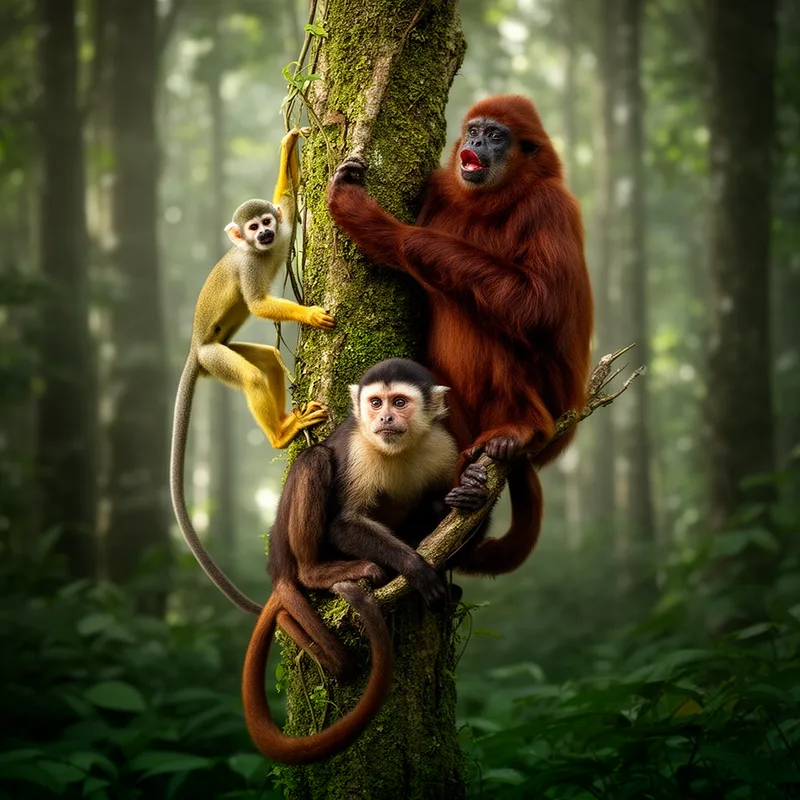
Cebidae
- noun
- /ˈsɛbɪˌdeɪ/
- Specialized
- The family Cebidae includes howler monkeys, capuchins, and squirrel monkeys.
Examples
-
Unlike marmosets and tamarins, members of the Cebidae family generally have prehensile tails.
-
The Cebidae family includes various species of monkeys.
-
Researchers have studied social behavior patterns in Cebidae for decades.
-
Did you know that Cebidae are known for their intelligence?
-
The family Cebidae includes howler monkeys, capuchins, and squirrel monkeys.
-
Researchers have studied social behavior patterns in Cebidae for decades.
-
Unlike marmosets and tamarins, members of the Cebidae family generally have prehensile tails.
Synonyms
A group of monkeys from Central and South America like capuchins and squirrel monkeys
Compounds
- Specialized
A group of monkeys from Central and South America like capuchins and squirrel monkeys
Surface Forms
Morphology
Cebidae = Cebus (opaque) = Cebus + idae
Formed by adding the technical taxonomic family suffix '-idae' to a genus name; this specialized formation is not transparent to general learners.
Etymology
Cebidae comes from the old Greek word kebos, which meant 'long-tailed monkey', and the ending -idae is the scientific ending for a 'family' of animals, as seen in Cebus (the capuchin monkeys). So, Cebidae is the family name for a group of New World monkeys.

