
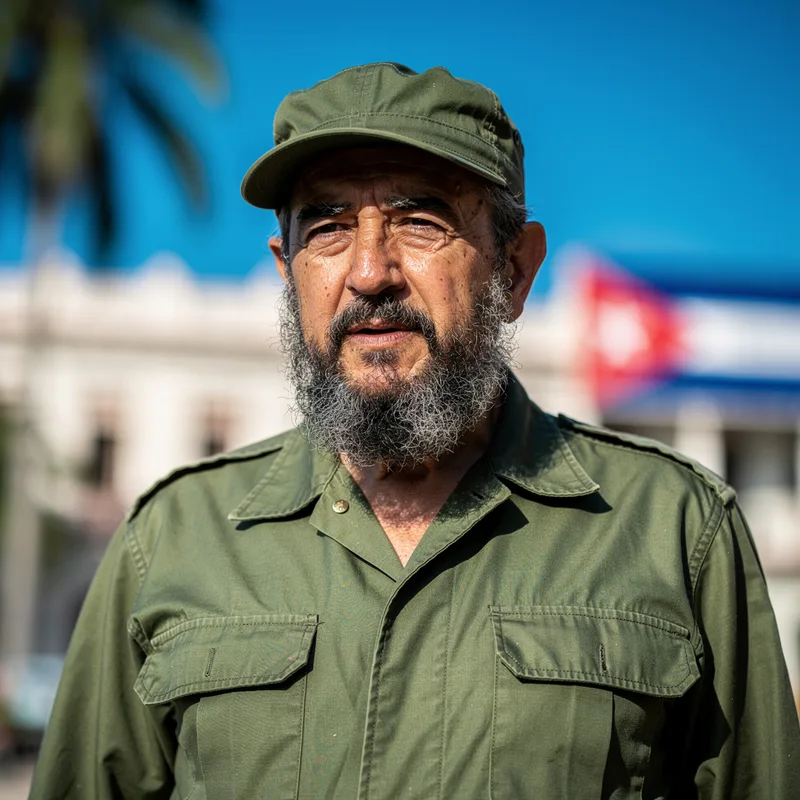
Castro
 199
5.5

- proper noun
- /ˈkæstroʊ/
- The population of Havana decreased after Castro's takeover.
- Fidel Castro
- the Castro regime
- President Castro
Loading YouTube…
Watch on YouTubeCuba has a lifetime regime with the Castro, with the Castros.
- Cuba has a lifetime regime with the Castro, with the Castros.
- The population of Havana decreased after Castro's takeover.
- Cuba's revolution under Castro was a fig leaf hiding communism.
- So how old were you when you guys found out that Castro executed your father?
- I I and that's when that plot to kill Castro was cooked up.
- We need I need you to help negotiate with Castro.
- It goes into the pockets of Fidel Castro.
- They failed at that Castro, though, and his policies.
- But at the same time, you'll have countries that are still playing this Fidel Castro type of role.
- And he's like, Castro is still alive and still fighting, OK.
- Then the soldiers would say, close your eyes and pray to Fidel Castro for candy.
- Here I did the performance during Fidel Castro's birthday by chance in Cuba.
- There's more here that's being told by Castro.
- But more than anything, he is the American who has a pro Castro bonafides.
- He was the, it was, it was the Castro of his time and, and it was legal.
- Some white guy who was playing Castro.
Examples
-
This is a solidarity group with the Cuban communists, with Castro and his regime.
-
Fidel Castro sent me personally to take vacant possession of this land.
-
I thought he lost everything when Castro took over.
-
So how old were you when you guys found out that Castro executed your father?
-
However, in interviews after that meeting, Castro denied that he made such a request.
Academic text (1992) -
Well, in that sense, Castro is an experimenter.
-
Only yesterday, history was supposedly on the side of socialism, which placed Castro among the world's winners.
Academic text (1990) -
Although not yet politically fatal, Castro is taking adequate measures to confront the crisis.
Academic text (1992) -
They became charismatic leader the same way Fidel Castro established charisma for himself.
-
In 1959, Castro led a successful revolution that ended decades of dictatorship in Cuba.
Synonyms
 59
3.7
Cuban leader who overthrew Batista in 1959 and set up a socialist government

 1
3.0
A Cuban leader who led the 1959 revolution and ruled Cuba as a socialist president
Surface Forms
Etymology
Castro comes from a Spanish family name that means 'castle' or 'fort', and it comes from the old Latin root castrum which means 'camp'. So think 'castle' to remember that Castro began as a place name and later became the family name of the Cuban leader.