
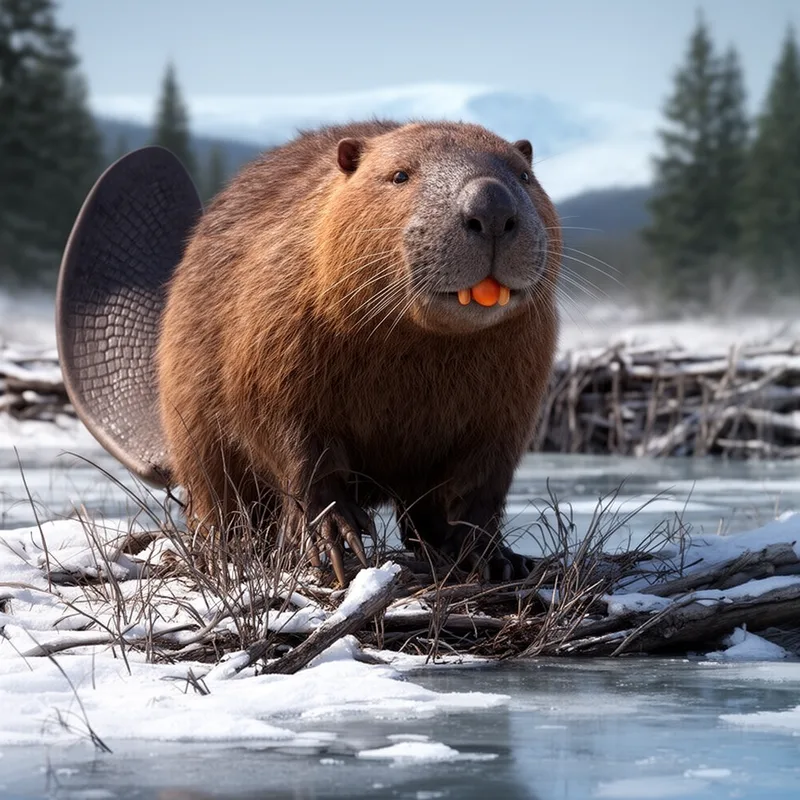
Castoroides


 1
9.9
- noun
- Specialized
- Paleontologists discovered a skull belonging to Castoroides in a Florida riverbank.
Examples
-
The fossils of Castoroides indicate it was much larger than modern beavers.
-
The Castoroides was much larger than modern beavers.
-
During the Pleistocene, Castoroides inhabited the wetlands of what is now the eastern United States.
-
Scientists discovered Castoroides fossils in North America.
-
The fossil remains of Castoroides suggest that these giant beavers could grow as large as a modern bear.
-
Scientists have discovered that Castoroides inhabited various regions in North America during the Pleistocene epoch.
-
Paleontologists are excited to study Castoroides as it provides insight into prehistoric mammal adaptations.
Surface Forms
Etymology
Castoroides comes from castor meaning 'beaver' and the ending -oides meaning 'like', the same idea as the -oid in humanoid. So Castoroides means 'beaver-like', a fitting name for the giant, now-extinct beavers that lived long ago.