
Carya ovata
- noun
- Specialized
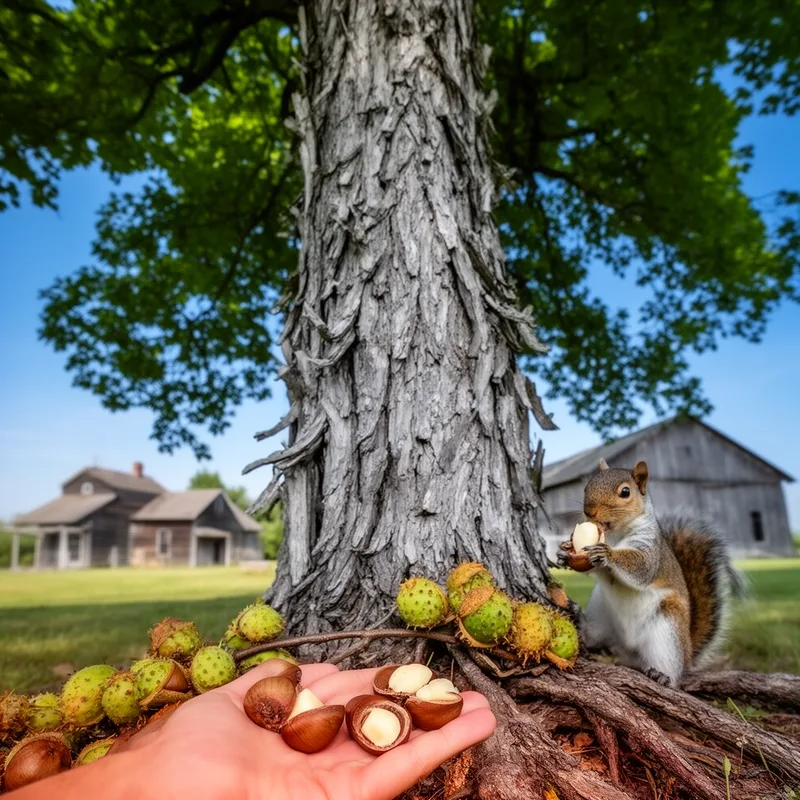
- The distinctive bark of Carya ovata peels away in long strips, giving it its common name, shagbark hickory.
Examples
-
The Carya ovata produces nuts that are a favorite among squirrels and humans alike.
-
Many old farmhouses in the Midwest are shaded by towering Carya ovata trees.
-
The Carya ovata produces delicious nuts each fall.
-
Have you ever seen a Carya ovata in the wild?
-
The Carya ovata is easily recognized by its shaggy grey bark and sweet edible nuts.
-
Squirrels eagerly gather the nuts from the ground beneath a Carya ovata tree every autumn.
-
In the forest, a mature Carya ovata stands out with its unique peeling bark.
Synonyms


 1
9.8
1
9.8
A North American hickory tree with loose gray bark that peels and nuts you can eat

A North American tree with loose, peeling gray bark and nuts you can eat
Surface Forms
Morphology
Carya + ovata
This is a Linnaean binomial: the genus name Carya explicitly identifies a hickory/pecan group, and if a learner recognizes ovata as related to English 'ovate' (egg-shaped) they can infer it denotes a particular species of hickory. Because species epithets are Latin labels and 'ovata' is not a regular English word in the input, the interpretation is partly recoverable but depends on botanical/Latin knowledge rather than everyday composition, so it is only partially transparent.
Etymology
Carya ovata comes from old word parts: Carya is from a Greek word for 'nut' and ovata means 'egg-shaped', so the name gives the picture of a nut-bearing tree with oval parts. Its common name 'shagbark', from the bark peeling away in long strips, adds a second image and helps you remember this species today.