

Cartesian
- noun
- /kɑrˈtiːzjən/
- And then you have perhaps those who think of mind and body in this Cartesian dualistic way.
Examples
-
It is difficult to express just how disturbing it is to see people still peddling this Cartesian fantasy that animals don't experience pain.
-
So, I mean, you gave a really nice and helpful explanation of Cartesian skepticism.
-
And in both of them you're getting really key Cartesian ideas.
-
This is sort of like the Cartesian cogito.
-
Because I think this will all tie in and show people that the sort of Cartesian duality of body and mind is really illusory.
-
It's just one thing Venus if that argument if the argument if if trying to run the Cartesian argument for astronomy fails.
-
Many scientists are influenced by Cartesian ideas in their theories about consciousness.
-
The debate between mind and body continues to fascinate those who study Cartesian philosophy.
-
As a student of philosophy, she often discusses the principles that define Cartesian thought.
Compounds

- Specialized


 1
6.3
1
6.3
A number that shows the position of a point on a graph, like the x or y value

- Specialized
1
5.2
Two straight lines on a graph that cross at zero to show where points are
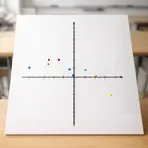
- Specialized
A flat area with two crossing lines used to show points by x and y numbers
Surface Forms
Morphology
Etymology
Cartesian comes from the name of the French thinker René Descartes. A 'Cartesian' is someone who follows his idea that careful, clear thinking is the foundation of knowledge, which is why the word names his followers.