
Cartesianism


 1
9.9
- noun
- /kɑrˈteɪʒənɪzəm/
- Specialized
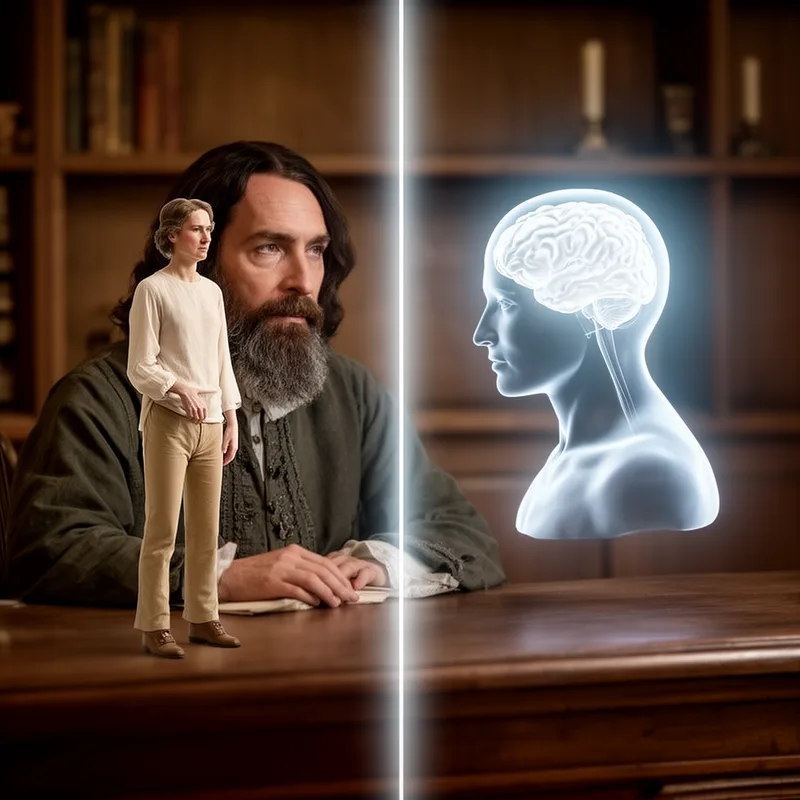
- In discussions about philosophy, the separation of mind and body is a central tenet of Cartesianism.
Examples
-
Many critical analyses of modern science reference Cartesianism to highlight the divide between mental and physical realms.
-
So again, a rejection of Cartesianism and of the rationalism, you could say, that is involved there.
-
Cartesianism will survive, he tells us.
Fiction book (1990) -
In Cartesianism, resemblance and difference are the grounds for authority and error.
Academic text (1999) -
Even without Christian belief, Thomism makes human beings more at home with their homelessness than Cartesianism.
Academic text (1997) -
Let us briefly reconsider, in this connection, Tocqueville's account of American Cartesianism.
Academic text (1998) -
The ideological deference to Cartesianism means that scientists, indirectly, have become sovereign.
Academic text (1997) -
The project to develop a nondual framework that moves beyond a stultifying Cartesianism is most promising, and it is the last chapter of the book that should be the locus of that project's emergence.
Academic text (2016) -
The subject they are least familiar with is philosophy, where pantheism, the allegory of Plato's cave, noumena, and schools like Cartesianism are words and thoughts they have never heard before.
Academic text (1990) -
Thus, Gamaches argued, it was essential for Cartesianism to resist Newtonianism on this point, namely on the idea of absolute space, unless it wanted to revert to Aristotelianism.
Academic text (2016)
Surface Forms
Morphology
Etymology
Cartesianism comes from the philosopher Descartes and the ending -ism, which means 'a system of beliefs'. Descartes argued that the 'mind' and the 'body' are separate, so Cartesianism means the idea that the mind and body are seen as different.