

Carolina jasmine
- noun
- /ˌkɛrəˈlinə ˈdʒæzˌmiːn/
- US
- Be careful when planting Carolina jasmine, as it is poisonous to pets and humans.
Examples
-
The garden was filled with the sweet scent of Carolina jasmine in the spring.
-
The vibrant yellow flowers of Carolina jasmine add a bright splash of color to southern landscapes.
-
The Carolina jasmine blooms beautifully in the spring.
-
Many gardeners love the Carolina jasmine for its fragrance.
-
Be careful when planting Carolina jasmine, as it is poisonous to pets and humans.
-
The garden was filled with the sweet scent of Carolina jasmine in the spring.
-
The vibrant yellow flowers of Carolina jasmine add a bright splash of color to southern landscapes.
Synonyms
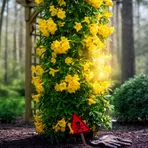
An evergreen climbing plant from the southeastern United States with sweet-smelling yellow trumpet flowers that is poisonous

An evergreen climbing vine from the southern United States with fragrant yellow flowers poisonous to people and pets

A climbing evergreen plant that has sweet yellow funnel-shaped flowers and poisonous parts
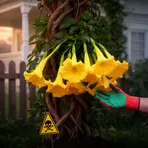
A poisonous woody evergreen vine with sweet-smelling yellow flowers shaped like funnels in the southeastern United States
Surface Forms
Morphology
Carolina + jasmine
The noun combines a place-name 'Carolina' with the plant 'jasmine', so its core meaning — a jasmine associated with (or from) Carolina — is directly derivable from the constituents. Although details like poisonous or evergreen are lexical specifics a learner might not infer, the compositional place-name + noun pattern is straightforward and cross-linguistically familiar, making the basic referent transparent to a B1 learner who knows both words.
Etymology
Carolina jasmine comes from where the plant grows and how it smells. People called it Carolina for the southern US area and jasmine because the yellow flowers have a sweet smell like true jasmine, so the name shows it is a sweet-smelling yellow vine from the Carolinas that is 'poisonous'.

