
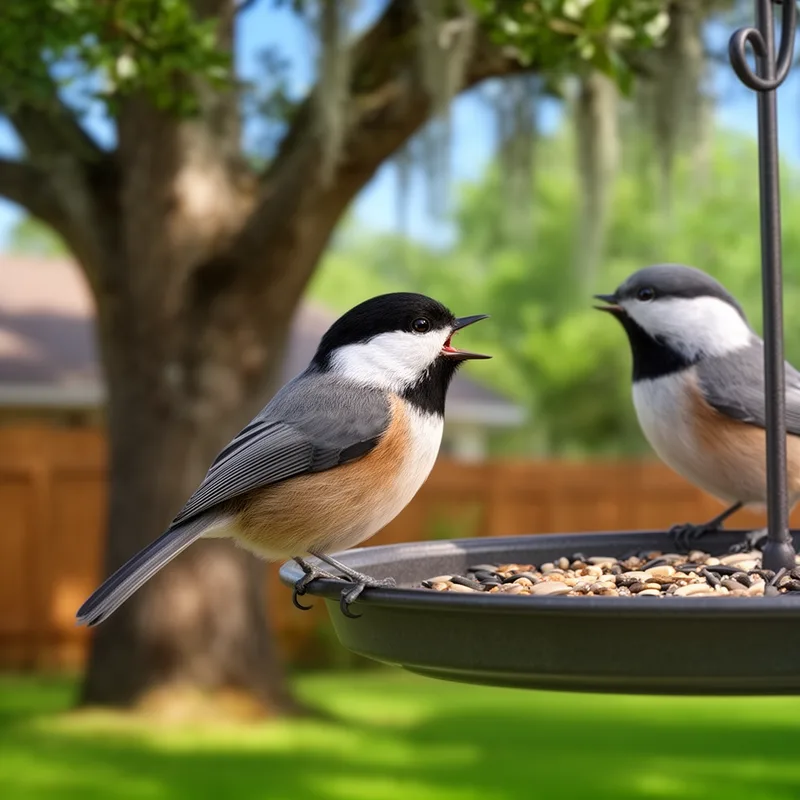
Carolina chickadee
- noun
- /ˌkɛrəˈlinə ˈʧɪkəˌdi/
- US
- The Carolina chickadee is known for its distinctive call.
Examples
-
The Carolina chickadee often visits backyard feeders throughout the southern United States.
-
Unlike its northern cousin, the Carolina chickadee is slightly smaller and found further south.
-
We spotted a Carolina chickadee singing in the oak tree early this morning.
-
I spotted a Carolina chickadee in my backyard yesterday.
-
At dawn, the Carolina chickadee started singing from the branches of the nearby tree.
-
The Carolina chickadee is easily recognizable by its distinct black cap and cheerful call.
-
My favorite bird to watch in the backyard is the Carolina chickadee, especially during the winter months.
Synonyms

 9
5.8
9
5.8

A small North American bird with grey and black feathers and a clear cheerful call

A small bird from the southern United States often seen at bird feeders
Surface Forms
Morphology
Carolina + chickadee
The compound combines the place name 'Carolina' with the known bird type 'chickadee', so a learner who knows both constituents will infer it names a chickadee associated with the Carolina region (a regional/species variety). This place + noun, referential naming pattern is common and compositional across languages, making the meaning directly derivable from the parts.
Etymology
Carolina chickadee gets its name from where it lives and the sound it makes: Carolina points to the southern United States and chickadee copies the bird's 'chick-a-dee' call, so the name helps you remember it is a small singing bird from the south.