
Carolina buckthorn
- noun
- /ˌkɛrəˈlinə ˈbʌkˌθɔrn/
- US
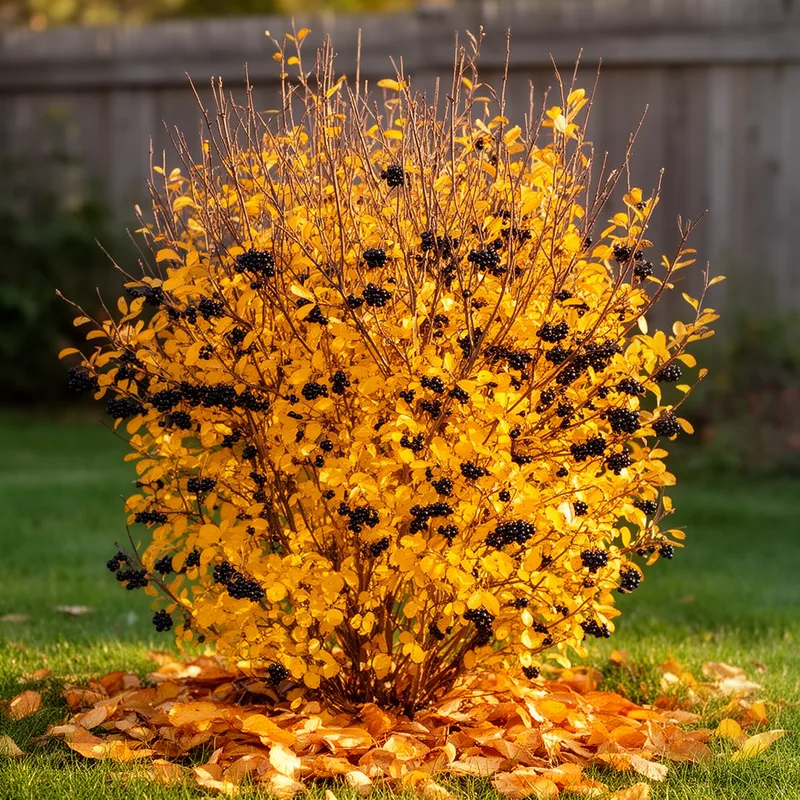
- The Carolina buckthorn is prized for its golden-yellow autumn foliage and attractive berries.
Examples
-
Many birds feed on the fruit of the Carolina buckthorn during late summer.
-
We planted a Carolina buckthorn in our backyard to attract wildlife.
-
The Carolina buckthorn is known for its beautiful autumn leaves.
-
Many gardeners love the Carolina buckthorn for its hardiness.
-
Many birds feed on the fruit of the Carolina buckthorn during late summer.
-
The Carolina buckthorn is prized for its golden-yellow autumn foliage and attractive berries.
-
We planted a Carolina buckthorn in our backyard to attract wildlife.
Synonyms

A small bush from eastern and central United States with black berries and golden yellow leaves in autumn

A small tree or shrub with golden-yellow leaves in autumn and small black berries
Surface Forms
Morphology
Carolina + buckthorn
This is a compositional place-name + noun compound: knowing 'Carolina' as a region and 'buckthorn' as a shrub allows a learner to infer it denotes a buckthorn associated with Carolina. Such geographic naming of species is cross-linguistically common and follows transparent noun-modifier patterns, so a B1 learner who knows both constituents can understand the meaning.
Etymology
Carolina buckthorn gets its name from Carolina (the region) and buckthorn (a 'thorny bush' with 'berries'). So the name creates a simple picture of a thorny shrub from Carolina with dark berries and bright golden leaves in autumn, which is why it refers to that plant today.

