

Carcharhinus
- noun
- /ˌkɑrkəˈraɪnəs/
- Specialized
- The Carcharhinus group includes several species that are commonly found in warm coastal waters.
- Carcharhinus shark
- Carcharhinus plumbeus
- Carcharhinus sandbar shark
Examples
-
Research has shown that species within the Carcharhinus genus, such as the blacktip shark, are increasingly affected by climate change.
-
Its allied species, C. carcharhinus, is highly riverine in PNG (Kan and Taniuchi, 1991).
Academic text (1995) -
...it's been at least a week since I've seen any carcharhinus leucas.
-
If the data could not be verified, it was deleted or assigned to a nonspecific category such as "unidentified Carcharhinus."
Academic text (1998) -
Analyses were divided between efforts in the nursery ground of the sandbar shark, Carcharhinus plumbeus, in Chesapeake Bay and efforts outside the Bay.
Academic text (1993) -
The stomach of the 472 cm male shark contained the remains of a requiem shark, Carcharhinus sp. (probably C. plumbeus), estimated to be 180 cm long.
Academic text (1994) -
The bull shark, classified as Carcharhinus leucas, is known for its ability to thrive in both saltwater and freshwater.
Synonyms

A group of sharks that live in warm seas, like bull and blacktip
Compounds

- Specialized
A large, aggressive shark called the bull shark that lives in warm shallow water near the coast and in rivers
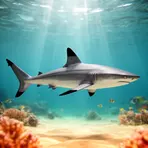
- Specialized
A shark with black tips on its fins that lives in warm coastal waters

- Specialized
A blue-grey shark that lives in warmer and cooler seas worldwide

- Specialized
A large gray shark often called the sandbar shark that lives near sandy Atlantic coasts
Surface Forms
Etymology
Carcharhinus comes from Greek parts carchar- meaning 'sharp' and -rhinus meaning 'nose'. So, thinking of a 'sharp-nosed' shark helps you remember that Carcharhinus is the scientific name for a group of common sharks like the bull and blacktip.

