
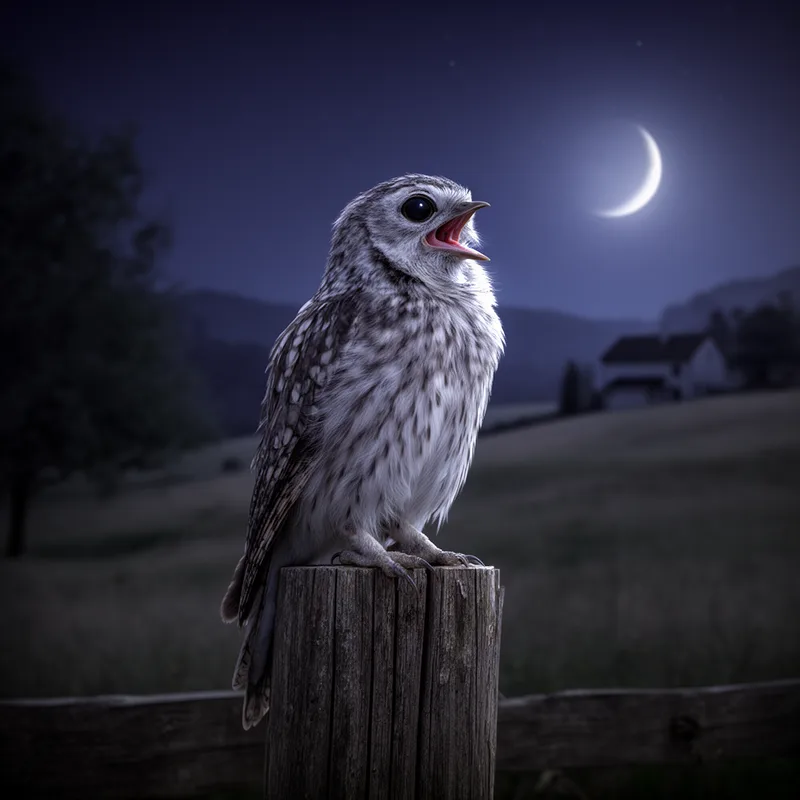
Caprimulgus vociferus
- noun
- /ˌkæprɪˈmʌlɡəs voʊˈsɪfərəs/
- Specialized
- The distinctive call of the Caprimulgus vociferus can be heard on warm summer nights in the countryside.
Examples
-
Researchers tracked the migratory patterns of Caprimulgus vociferus across several eastern states.
-
Many birdwatchers hope to spot a Caprimulgus vociferus during their nocturnal outings.
-
The Caprimulgus vociferus is known for its distinctive call at night.
-
Have you ever seen a Caprimulgus vociferus in the wild?
-
Birdwatchers are excited to listen for the call of the Caprimulgus vociferus at dusk.
-
The Caprimulgus vociferus, often heard at night, blends well into its forest surroundings.
-
During the summer, the Caprimulgus vociferus fills the air with its unique song right after sunset.
Synonyms
 2
9.9
2
9.9

A bird active at night in North America that makes the same call again and again
Surface Forms
Morphology
Caprimulgus + vociferus
This is a Latin scientific binomial (a proper name) rather than a compositional English phrase, so its specific meaning ('the eastern whip-poor-will') is not derivable from the constituents by a B1 learner. Even if a learner recognised 'Caprimulgus' as a genus or saw a resemblance between 'vociferus' and English 'vociferous', that would not reliably yield the species identity or the full descriptive meaning, making it effectively idiomatic/opaque for learners.
Etymology
The noun Caprimulgus vociferus comes from old Latin words: Caprimulgus was once thought to mean 'goat-sucker' and vociferus means 'noisy', because people long ago believed these night birds sucked milk from goats and they make loud calls at night. So, the name helps you remember a night bird known for its loud, repeating call.