
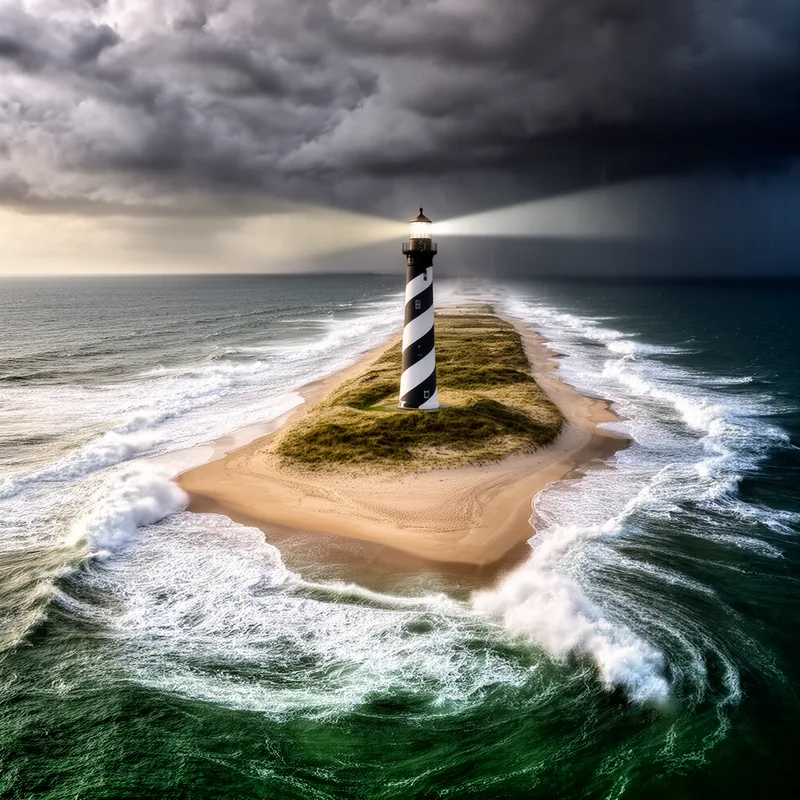
Cape Hatteras


 1
6.8
1
6.8
- proper noun
- /keɪp ˈhætəˌrəs/
- Every summer, thousands of tourists flock to Cape Hatteras to enjoy its beautiful beaches and unique coastal scenery.
- Cape Hatteras National Seashore
- Cape Hatteras Lighthouse
Examples
-
Cape Hatteras National Seashore Recreational Area was authorized in 1937, but wasn't established until 1953 and dedicated in 1958.
Blog text (13) -
On Cape Hatteras National Seashore, a revolutionary management plan is finally putting embattled sea turtles and birds on near-equal footing with ORV drivers.
Blog text (13) -
If it weren't for the fishing, there would be no Cape Hatteras.
Blog text (13) -
Each year about two million visitors hit the beach at Cape Hatteras to swim, surf, fish, birdwatch, and more.
Blog text (13) -
At 8 PM, the AccuWeather man gave Sandy's location at 380 miles east-southeast of Cape Hatteras.
Blog text (13) -
Fully loaded: A massive ORV, outfitted with fishing-rod holders and an enormous ice chest, in Cape Hatteras National Seashore.
Blog text (13) -
But there I was on Memorial Day weekend 2012, tooling around in one on Cape Hatteras National Seashore, the 67 miles of "Outer Banks" that seal Pamlico.
Blog text (13) -
Cape Hatteras is famous for its unpredictable weather and treacherous waters, making it a challenging spot for sailors.
-
The lighthouse at Cape Hatteras guides ships safely away from the perilous shoals that surround the area.
Surface Forms
Morphology
cape + Hatteras
The noun 'cape' clearly signals a promontory projecting into water, while 'Hatteras' is a proper name that labels the specific place. A B1 learner who knows the word 'cape' can therefore infer that 'Cape Hatteras' refers to a headland called Hatteras, even if they do not know its exact location or local characteristics.
Etymology
Cape Hatteras is a cape that sticks out into the Atlantic, where strong currents, moving sandbanks, and sudden storms caused many shipwrecks. Because of these real dangers, sailors long 'feared' the area and built a tall lighthouse to warn ships, so today the name means 'dangerous' seas and frequent storms.