
Canis lupus


 1
6.8
1
6.8
- noun
- /ˈkeɪnɪs ˈluːpəs/
- Specialized
- The newly discovered African wolf subspecies (Canis lupus lupaster) isn't even the top predator in its ecosystem, and it subsists largely ...
Examples
-
My instructions are to track down a specimen of Canis lupus, dispatch it with a rifle and examine the contents of its stomach.
-
All the researchers found was that there are Canis lupus wolves in Africa.
Blog text (25) -
So the diversity of Canis lupus is even greater than we thought.
Blog text (25) -
This finding is very much in keeping with our understanding that the diversity in domestic Canis lupus is reflected in the wild population.
Blog text (25) -
This animal was always called Canis lupus lupaster.
Blog text (25) -
That means that Canis lupus has an African range that extends from Egypt and Libya to Ethiopia.
Blog text (25) -
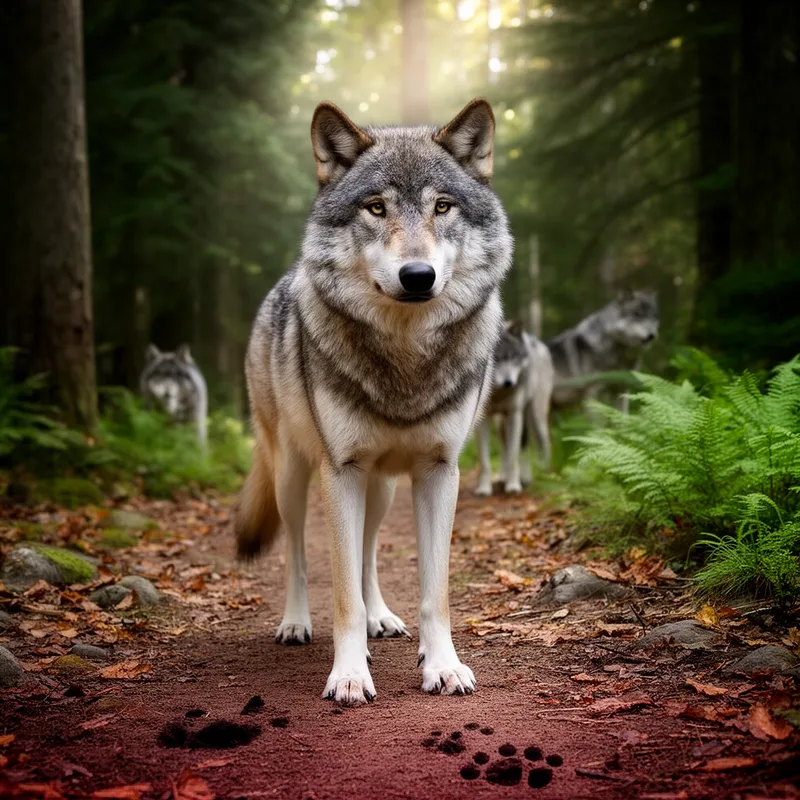
The scientific name Canis lupus refers to the gray wolf, which is native to forested areas.
-
Researchers have classified the gray wolf as Canis lupus, emphasizing its role in ecosystems.
-
Conservation efforts are focused on Canis lupus populations to maintain their numbers in the wild.
Synonyms
 4
3.0
4
3.0
A large wild animal like a dog with gray fur that lives in forests and often hunts in packs
 1
4.7
1
4.7
A large wild wolf that lives in North American forests and has grey fur
Surface Forms
Morphology
Canis + lupus
This is a Latin taxonomic binomial combining the genus Canis (a canid/dog genus) and the species epithet lupus (Latin for wolf), so a learner who knows both constituents can directly infer it refers to the wolf. The form is fully compositional and follows an international scientific naming convention, making the meaning transparent to someone familiar with the roots (although opaque to learners who do not know the Latin terms).
Etymology
Canis lupus comes from old Latin words: Canis means 'dog' and lupus means 'wolf'. So Canis lupus literally names the animal as a 'dog' and a 'wolf' and is used as the scientific name for the gray wolf.